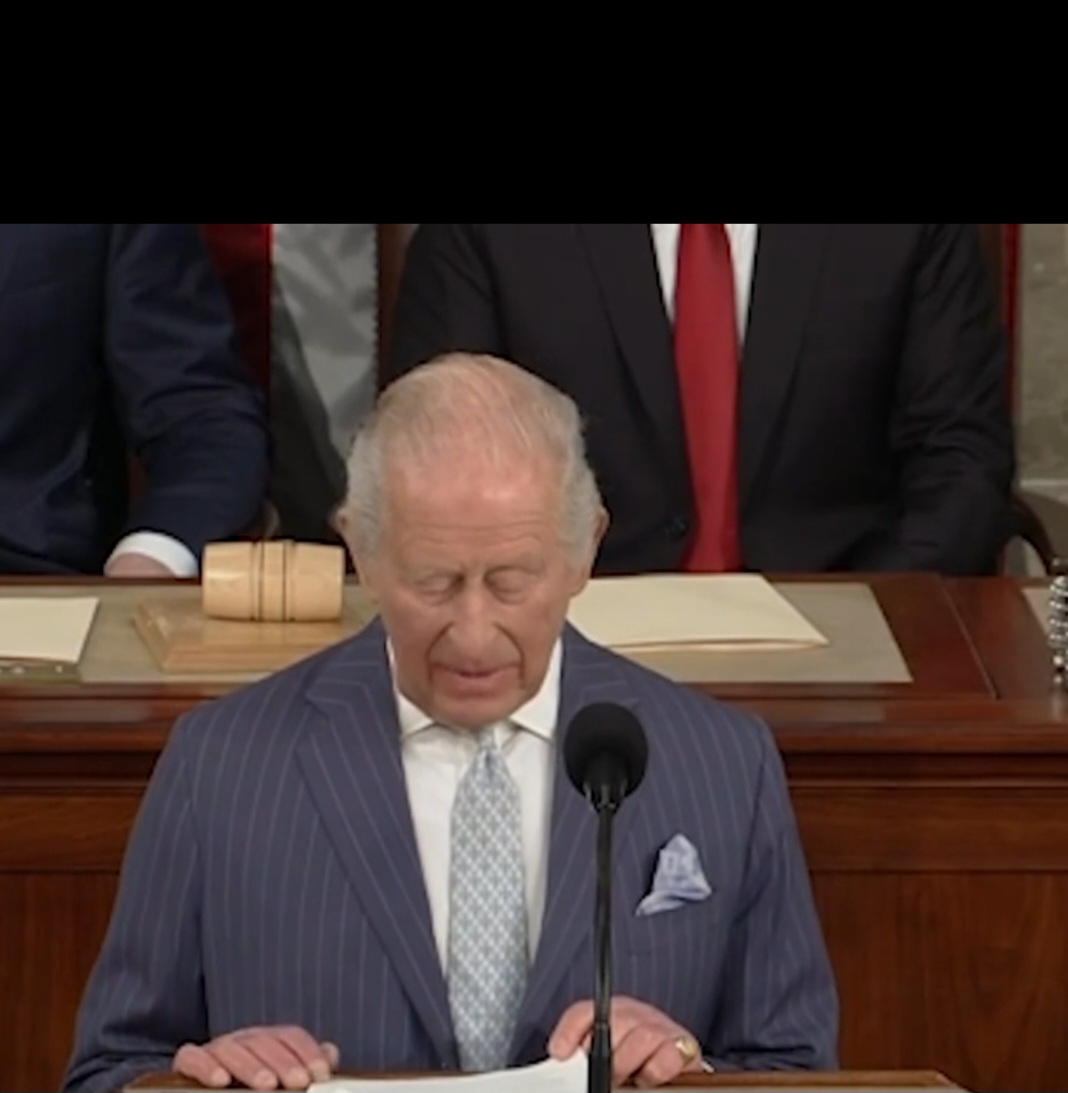
King Charles III’s visit to the United States, and particularly his address to Congress, was far more than a ceremonial occasion. It was a moment of quiet but consequential diplomacy—one that demonstrated the unique role a constitutional monarch can play in turbulent times. At a moment when democratic norms are under strain and the international order appears increasingly fractured, the King’s presence carried both symbolic weight and moral resonance.
One of the factors that made the visit so significant was his ability to remain above day‑to‑day politics while still engaging meaningfully with the most pressing issues of our time. As a constitutional monarch, King Charles does not speak as a partisan figure, nor does he represent the agenda of a particular government. Instead, he embodies continuity, institutional memory, and a tradition that transcends electoral cycles. That distance from partisan contest gives his words a different register. He speaks not to win arguments, but to remind audiences of enduring principles.
His congressional speech struck a careful balance between affirmation and gentle admonition. On the surface, it was rich in positive language—celebrating shared history, democratic traditions, and the longstanding partnership between the United Kingdom and the United States. Yet woven into that affirmation was a subtle but perceptible reminder of the principles that sustain that partnership. Without naming individuals or descending into overt criticism, the King delivered what might be described as a soft pushback against political tendencies that have unsettled alliances and strained international norms.
His historical allusions were especially powerful. By invoking Magna Carta as a pivotal document in the evolution of the rule of law, he did more than offer a ceremonial nod to British heritage. Magna Carta symbolizes limits on arbitrary power, the supremacy of law over personal rule, and the accountability of authority—principles foundational to both British and American constitutional traditions. In recalling this legacy before Congress, the King reaffirmed the sanctity of constitutional restraint and institutional balance. At a time when executive authority, democratic conduct, and respect for legal norms are subjects of intense debate, the reference carried unmistakable contemporary relevance. It was a reminder that democracy depends not on personalities, but on institutions.
Equally significant was his emphasis on the indispensability of the transatlantic alliance. By framing the relationship between Europe and the United States as one grounded in shared values rather than mere strategic convenience, the King underscored its civilizational importance. His reference to Russia’s invasion of Ukraine reinforced that point. The conflict is not merely a regional crisis; it represents a broader challenge to sovereignty, democratic integrity, and the rules‑based international system. In highlighting these realities, the King suggested that the stakes for democratic cooperation have rarely been higher.
Throughout the speech, he stressed that democratic values and international order are being tested in the present moment. The alliance between Europe and the United States, he implied, has never been more crucial. If there was a message aimed at recent strains in transatlantic relations, it was delivered with tact and good humour rather than confrontation. The tone was measured, even warm—but the underlying appeal was serious: a call to renewed commitment to alliances, to institutional norms, and to the cooperative spirit that has long underpinned the postwar order.
In this sense, the King’s message functioned as a subtle nudge—a reminder of the “old order” not as nostalgia, but as a framework that has preserved peace and prosperity for decades. He did not lecture; he invoked history. He did not accuse; he appealed to shared heritage. That is the quiet power of constitutional monarchy: the ability to caution without condemning, to defend principles without descending into political rancour.
Ultimately, King Charles’s visit was important not because it produced immediate policy shifts, but because it reaffirmed moral and institutional foundations at a time when both feel fragile. In remaining above politics, he was able to speak to politics’ deeper meaning—the values, restraints, and alliances that make democratic governance possible.
In an era of polarization and geopolitical uncertainty, such reminders matter. They may be delivered softly, but their resonance can be profound.
A Monarch Above Politics: The Deeper Significance of King Charles’s Visit to the United States
 Site Title