
People have long sought a kind of immortality by leaving behind legacies—works of art, writing, institutions, traces of themselves meant to endure. This impulse stretches back across human history. Shakespeare, for instance, imagined that his poetry could grant a form of permanence, declaring, “So long as men can breathe or eyes can see, / So long lives this, and this gives life to thee.” Here, the poem itself becomes a vessel of immortality, preserving not only the beloved but, implicitly, the poet as well.
But why should this matter to us? It may benefit future generations, certainly, yet what good does it do for the one who creates it? We will not be around to witness its impact or take comfort in its survival. In that case, in what sense does the pursuit of immortality through legacy truly make sense for us at all?
Few philosophical questions are as old—or as persistent—as this one: why do we strive for a kind of immortality through our achievements? Art, writing, and other legacies seem to promise a life that stretches beyond our own, yet we will never be there to witness it. So what, exactly, are we gaining?
The answer may be less about the future and more about the present. We do not create for the sake of some distant recognition after death, but to make our lives feel coherent and worthwhile now. Human life is, in many ways, a quiet struggle against existential unease—a sense that everything is fleeting, unstable, and ultimately beyond our control. In response, we reach for meaning. We commit ourselves to projects, relationships, and creations that allow us to feel anchored.
In doing so, we construct what might be called a form of symbolic immortality. It is not that we literally continue on, but that our actions seem to resist the erasure that time threatens. The alternative—surrendering entirely to the chaos and impermanence of the world—is difficult to accept. Meaning, then, becomes less a luxury and more a necessity. It is what renders life not just bearable, but, in some fragile and deeply human way, lovable.
There is also the question of the self. We tend to think of ourselves as discrete individuals: bounded, self-contained, and ultimately extinguished at death. From that perspective, the idea of legacy can seem irrelevant. If consciousness ends, then nothing that follows can matter to us—at least not in any direct, experiential sense. This is a coherent and, in many ways, compelling view.
Yet it may rest on too narrow a notion of who we are. Our sense of self is rarely confined to the limits of our own bodies or lifespans. We are entangled with others—extended through our children, embedded in our communities, and shaped by the cultures that give us language, values, and form. In this broader frame, the self is not a fixed point but a continuum, something that exceeds the individual life.
Seen this way, the idea of living on in one’s work is not mere sentimentality. When a writer says, “I live in my work,” it is not meant literally. Rather, it gestures toward a different understanding of life—one in which a person’s thoughts, sensibilities, and ways of seeing continue to move through the world, carried by others. What persists is not the body or the private stream of consciousness, but something less tangible and yet still real: a pattern of life that outlasts the individual who first gave it shape.
Perhaps, then, the Epicurean view has the final word. The world matters to us only insofar as we are alive to experience it; beyond that boundary, meaning dissolves. As Epicurus famously put it, “Where death is, I am not; where I am, death is not.” On this account, the idea of legacy cannot truly concern us once we are gone. Whatever follows our death unfolds without us, and to invest it with personal significance may seem like a subtle form of self-deception.
There is a hard clarity to this position. The dead do not witness, feel, or take pride in what they leave behind. No work, however enduring, can be experienced by the one who created it once their consciousness has ceased. In that sense, legacy belongs entirely to the living—to those who remember, interpret, and carry it forward—not to the one who is no longer there to claim it.
Perhaps, then, the point is not to solve the problem of death at all. Creating art, writing novels, founding institutions—these are not strategies for outwitting mortality, but ways of learning how to live with it. They do not grant us literal permanence; rather, they reshape our experience of finitude.
Legacy, in this sense, is not for the person we will no longer be, but for the one we are now. It offers a way to gather the scattered moments of a life into something that feels coherent, directed, and meaningful. In a world marked by constant change and uncertainty, the act of creating or building something enduring allows us to take hold of our existence, however briefly, and give it form.
What we seek, then, is not immortality in any strict sense, but a kind of steadiness within impermanence—a way of anchoring ourselves in the midst of flux. Legacy is less about surviving death than about making life, while it is ours, feel inhabitable and whole.
You know the waves will eventually wash ashore and carry everything away, and yet you still choose to build a sandcastle. Why devote yourself to something so obviously temporary? The example brings the question of legacy and immortality into sharp focus.
What matters is not the endurance of the sandcastle, but the act of building it. Its value lies entirely in the doing—in the shaping, the attention, the small satisfaction of creation. There is no real expectation that it will last, nor does its meaning depend on that. As a piece of art, it is complete in the moment of its existence, not in whatever remains of it afterward.
In this way, the sandcastle quietly challenges the very premise of immortality. It suggests that something need not endure to be worthwhile. Its brief presence is already enough to justify the effort, reminding us that meaning can reside fully in the act itself, rather than in any hope of permanence.
Travelling Light
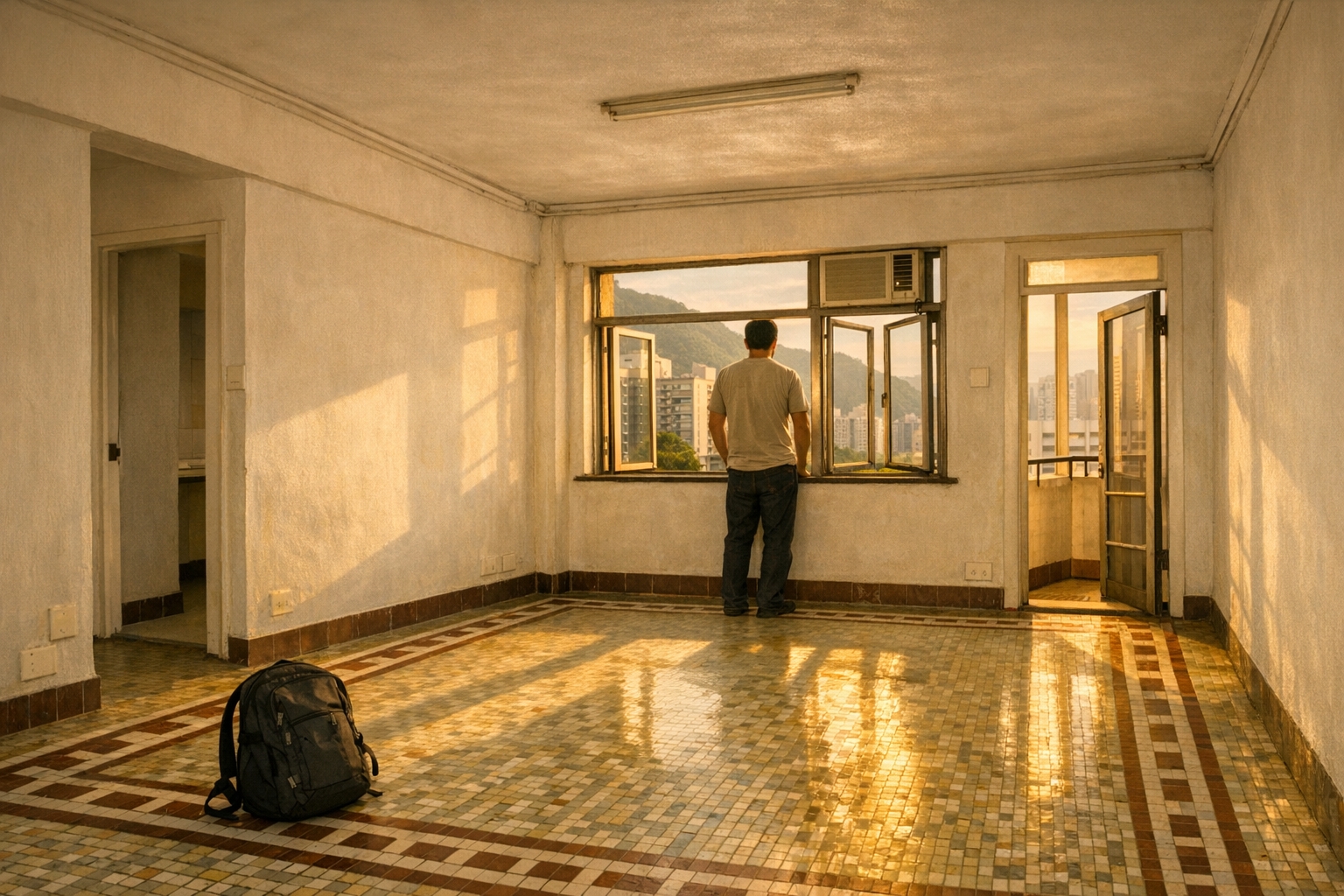
I recently made the decision to move out of my home and into a long-stay hotel — and honestly, it wasn’t that big a deal. As a pensioner, I travel light these days, so I spent no more than half an hour stuffing everything I needed into a rucksack. Done. For most people, moving home is nothing short of an epic undertaking — the sorting, the packing, the endless decluttering. But not for me.
The idea didn’t come out of the blue. It had been quietly taking shape for years, rooted in a bigger question I’d been asking myself: how did I want to live out my retirement?
I can still pinpoint the exact moment it first stirred. It was eight years ago, on a Friday evening in July, when I said goodbye to my colleagues at a university in Macau where I’d been working for many years. I switched off my computer for the very last time, and pressed through the campus — past the glinting waterways and the green stretches of meadow shimmering in the summer sunset. It was a beautiful place, and I took my time leaving it.
Then I boarded the jetfoil back to Hong Kong — for the last time (I would still make trips back to Macau in the following years, but that’s a different story). As the ferry sailed out into a glowing but fast fading sunset, I sat with those fresh images of the campus still vivid in my mind, and something quietly shifted inside me. A chapter was closing, and a new one was waiting to be written.
When I arrived home in Hong Kong, I looked around the flat. Everything was familiar — perhaps too familiar. The sofa bed that my late mother had slept on until she moved out to a care home in her last years; the windows that framed the flux of the world for the past five decades. It all felt perfectly fine, and yet something nagged at me. I’d always assumed that retirement would simply mean returning home to resettle, to ease naturally into a quieter domestic life. But standing there, I wasn’t so sure anymore. I found myself wondering: ‘is this really how I want the next chapter to look?’
At first, I thought it might be about freedom. The romance of it — cutting loose, breaking free from routine. But that idea quickly fell apart under scrutiny. Freedom isn’t something you find by changing your location. If your heart is already free, it doesn’t much matter where you lay your head. I was just as free in my Hong Kong flat as I would ever be in any hotel room. So freedom wasn’t it.
What it was really about, I slowly came to realise, was the desire to travel light — not just in terms of luggage, but in life itself. And that began with taking a long, honest look at the things around me.
The flat was cluttered with years of accumulated living. Among the most meaningful objects were my mother’s personal effects — her clothes, her belongings, all the things she’d kept close when she was there. Letting go of them in the conventional sense felt unthinkable. But technology offered a quiet solution: I photographed everything and preserved it all in the digital world. It struck a balance between honouring the emotional weight of those memories and freeing myself from their physical presence. That was an important realisation — that keeping something in your heart doesn’t require keeping it in your home.
When the flat underwent a major renovation some years later, a great deal of old furniture was cleared out as a result and I took up lodging in a hotel in the meantime. When I moved back in, the place had been restored to its bare interiors, exuding the same sense of spaciousness as it did more than 50 years ago. With sunlight streaming in, sparkling off the freshly painted white walls and the shiny mosaic floor, it transported me back to being that child of ten in 1968 when I, upon opening its door, would enter a whole new world of light and roominess. The space now breathed in a way it hadn’t for decades. There was a kind of quiet clarity to it that I hadn’t expected to find so moving.
That experience of minimalism turned out to be more than just an aesthetic preference — it became a philosophy. A way of thinking about how to live. And it raised one final, liberating question: if I could feel this light, this unanchored, in my own renovated flat — why not take it one step further? Why not beat a path that would untie myself entirely from the idea of a fixed home, and simply see what that felt like?
And so a serviced apartment became the logical next step. Not a chase for something missing, not an escape from anything. Just a quiet, deliberate choice to live differently — to carry only what I needed, and leave the rest behind.
Beyond Consciousness — the Case for AI as a Creative Force
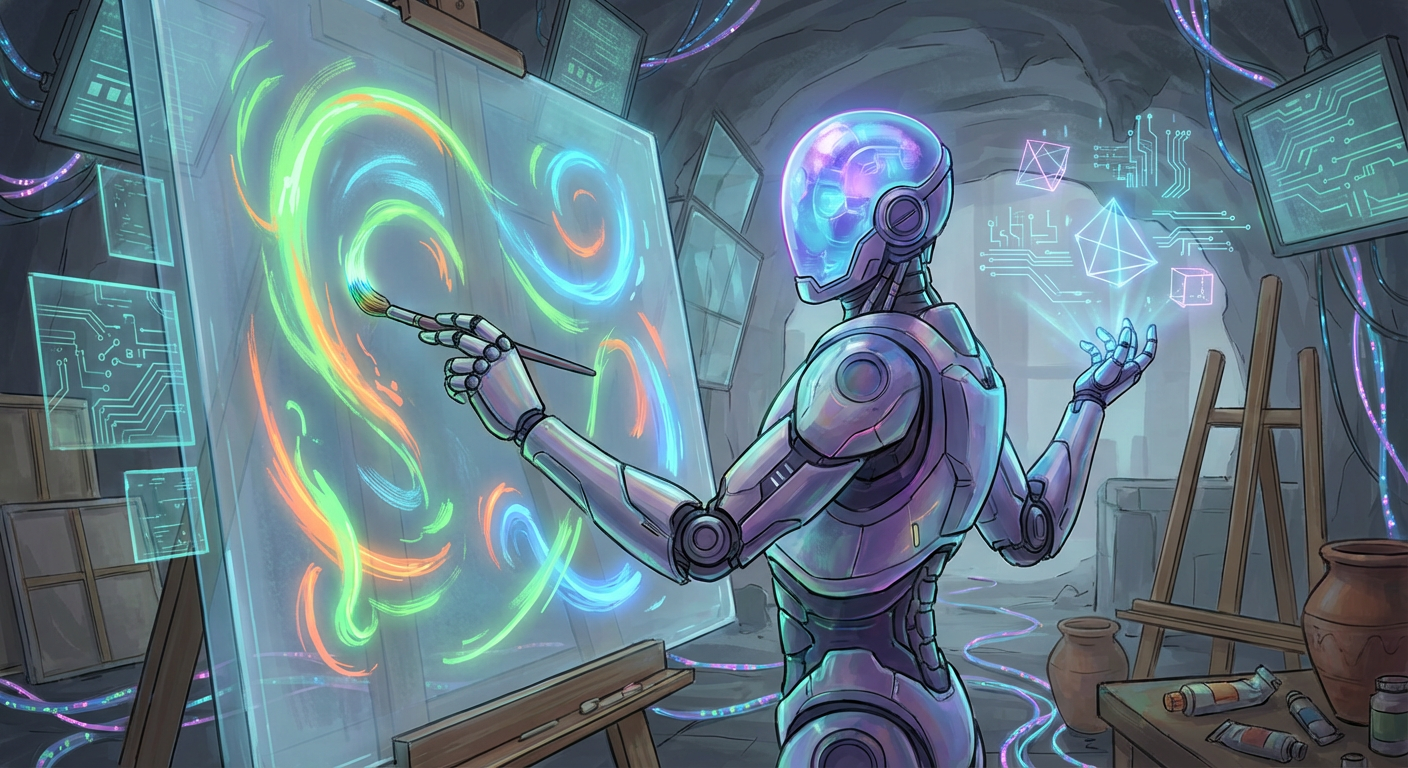
The definition of what it means for something to be “creative” often depends on perspective. Artificial intelligence has demonstrated its ability to compose music, write stories, and create visual art with such innovation and quality that its work can often be mistaken for that of a human. However, the process through which AI generates these creations is fundamentally different from human creativity. AI relies on identifying patterns within vast datasets and predicting what comes next, rather than drawing from personal experience or intention. It does not possess a mind of its own. For this reason, many argue that AI’s outputs, no matter how impressive, cannot truly be considered creative.
Those who assert that consciousness is a prerequisite for creativity often emphasize the role of subjective experience in the creative process. Why does a poet create the way they do? The focus on a particular theme, along with their selection of words and imagery, is part of a poet’s conscious effort to achieve specific effects or evoke a desired emotional response. These choices are guided by their individual experiences, intentions, and desires. From this perspective, AI falls short of qualifying as a true creator. It lacks consciousness, personal experience, and any innate desire to create. Consequently, critics argue that AI’s outputs, no matter how sophisticated or seemingly innovative, are merely the results of computational processes—imitative rather than original.
We judge creativity in a piece of work by evaluating whether it embodies the elements that define creativity. For something to be considered creative, it must be innovative and depart from conventional modes of representation. Creativity often surprises or even inspires awe, emerging in various forms—whether through combining familiar concepts in novel ways, pushing the boundaries of a particular field, or breaking completely from tradition to create something entirely new. Importantly, these judgments don’t require us to understand the inner life or consciousness of the creator. What matters is the experience the work offers us—the sense of originality and transformation it brings.
In this regard, AI is fully capable of producing creative work. Advanced language models, for example, can generate writing that rivals, and sometimes even surpasses, the creativity of the human mind. They can weave together ideas, experiment with language, and produce compositions that feel fresh and original, demonstrating that creative output doesn’t necessarily depend on consciousness.
Consciousness drives much of what humans do. It is the lens through which we understand our actions and the reasons behind them. Historically, creativity has been seen as a product of conscious effort—a uniquely human trait rooted in thought, intention, and personal experience. But with the advent of artificial intelligence, we are being challenged to rethink whether creativity must remain tied to the human mind. While human creativity is undeniably driven by consciousness, this alone does not automatically disqualify AI from being capable of creative expression.
When we admire a painting or listen to a piece of music, our primary interaction is with the work itself—its colours, composition, melody, or emotional resonance. Rarely do we stop to question the consciousness or inner life of its creator. What captivates us is the transformative and thought-provoking nature of the work, its originality, and its ability to elicit an emotional or intellectual response. In fact, our appreciation of creative works often begins and ends with the experience they provide. While understanding the creator’s intent or mental process may deepen our appreciation, it is not a necessary condition for judging a work as creative. In this sense, creativity can exist independently of conscious effort, as long as the output meets the criteria of being innovative, meaningful, and aesthetically or intellectually significant.
This shift in perspective invites us to see creativity not as something exclusively rooted in human consciousness, but as something that can emerge from other processes as well. AI, for instance, does not create out of personal intention or desire, but it is capable of producing outputs that demonstrate novelty and originality. If an AI-generated piece of art or writing can move us, surprise us, or provoke new ways of thinking, then it has fulfilled the same purpose as a human creation. Creativity, therefore, does not need to originate solely from human thought. It can be judged by the quality and impact of the work itself, regardless of how or by whom it was created.
We often associate creativity with human thought processes, assuming that only humans can truly create because only humans can think. This association has led us to reserve the concept of creativity exclusively for human efforts. However, AI challenges this assumption. While AI may not feel the urge to create or possess a conscious mind, its output can nonetheless be as creative as that of humans. An AI does not need to replicate the human experience of creativity in order to produce work that is innovative or transformative. By broadening our definition of creativity to focus on what rather than how, we can recognize that AI is not merely a tool, but a potential contributor to the evolving landscape of creative work.
In conclusion, creativity should not be limited to the confines of human consciousness or intent. While traditional notions of creativity have long been tied to subjective experience and conscious effort, the advent of artificial intelligence challenges us to rethink these assumptions. AI, though lacking personal desire or awareness, is capable of producing works that are innovative, transformative, and thought-provoking—qualities that define creativity itself. By shifting our focus from the creator to the output, we can recognize AI’s contributions as both valid and creative. As we move further into an era where technology and human ingenuity intersect, it is essential to embrace a broader and more inclusive understanding of creativity—one that acknowledges the potential of AI to expand the boundaries of what is possible in art, literature, and beyond.
Telling Stories to the Night
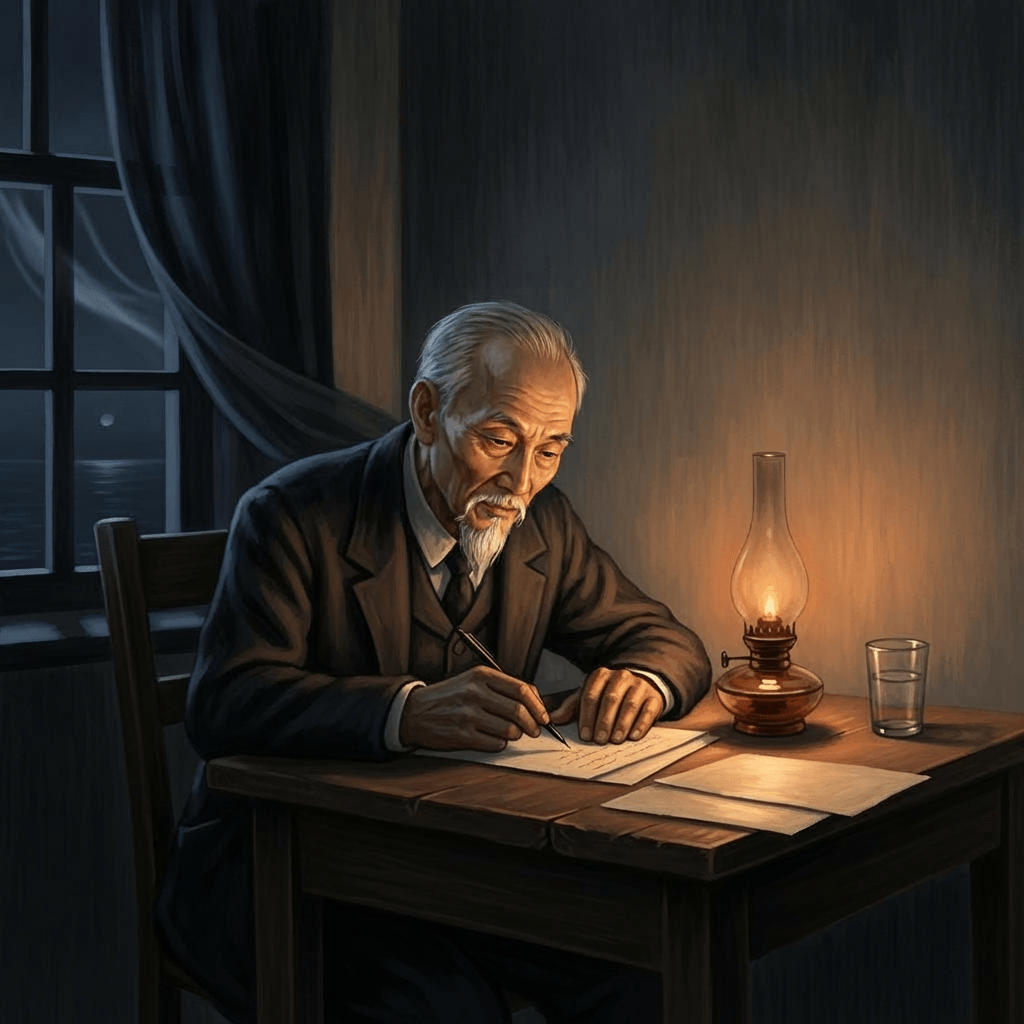
Amber light seeps into the dark, softening the edges of the things in the care home —chair, curtain, glass of water—until everything becomes mere smudges of shadows.
I take up my pen, as I often do at this hour, to write. Habit, almost: to trawl the day for small truths, to catch brief scraps of living in a net of words before they slip away. But tonight it’s different. Tonight I’m not trying to gather anything. I’m trying to reduce.
I’m writing a line—yes, only a line—here at the end of my dying days.
An epitaph. It’s a strange task, isn’t it? To leave behind a single line, and beyond that, cross into silence.
I’ve seen the world in constant motion. Monday follows Sunday, Tuesday follows Monday. It’s now September. Soon October. And things happen in between. I sought verbs to catch these moments the way I, once as a child, thought I could catch falling stars—by setting out a bucket of water and waiting for their reflections to settle there, trapped. So I believed verbs were the key to truth. The noun sits still, but the verb breathes.
What are you thinking, Bart? You’re so quiet? Margaret’s voice. I’ve been thinking about verbs, honey. Verbs? Then how would you think of me as a verb? She was laughing. You’re not serious. I am. Go on then—how would you animate me? If verbs capture the essence of life, as you say, how would you frame me in one? You bloom. Ah. And what about thirty years from now? Well? She looked at me. Such a tender look. Well, You’d still be blooming. Blooming still?
Where is she now? She may have faded long ago. Mother went twenty years past.
The trees outside green and brown—green and brown, green and brown—the way seasons verb themselves through wood. I thought verbs could best catch the fleeting, the fluorescent, the thing that flares and goes. And I came to believe that life, like everything else, was bracketed by verbs: to bud, to bloom, to fade, and all the others in between in infinite permutation. One summer night I trapped a moth in a box which I filled with plastic leaves and branches to emulate the woods through which it had flown. And I suppose I have done the same with life—trapped it in a box of verbs, hoping it might go on beating its wings there, believing the plastic leaves were real.
But now I see it as vanity. And yet I find glory in it too.
What is a story, after all? A net cast into the sea of chaos, hauling something back. I imposed order where there was none. Looking back at those protagonists I created—women, men, the dead, the living—they raged, they loved, they suffered. Hope existed alongside despair because I willed it so. I gave them motives. I gave them voices. Most important, I gave them a purpose for living. Never mind that they were fictional. The ghost said, “I said this because I was suffering.” Or he said, “I did that because it hurt so much I had no choice.” I soothed them by setting them at the beach where waves caressed them with whispers. I carved pattern from formlessness. From the raw, buzzing, inchoate mess of being, I extracted order. All this I did with words in those moments of quiet. All this I completed by giving them voices that could speak their emotions—their trepidations, their pangs of pain, their small bewildered joys. I turned the random falling of leaves into omen. I turned the conversation of two lovers into layers: silence and speech, the muted and the sounded, what was said and what could never be said.
Now death brings me an impossible task: to compress sixty years of stories into a single line. It asks me to reverse everything I ever did as a writer.Then, I expanded. I found words elastic, capable of stretching to hold whole lives. Now, I must pare it all down to a point of singularity—one sentence, maybe two. How can I compress sixty years into that? All those experiences that occurred between the greening and the yellowing of the trees outside. All those moments that seared themselves into memory. There is so much I want to say. How can any of it fit onto a cold stone?
Language is a sieve. We pour hot soup through it, and the froth filters away, the warmth escapes, the body of it slips through the mesh. What remains are only the solid bits—verbs, nouns. The bones of meaning. But the taste, the heat, the nourishment—the ineffable passes through and is lost
Once, Margaret and I stood on an island bluff, watching the sea foam against the rocks below. It was September. The wind came hard off the water, ruffling her hair across her face; she lifted her right hand to smooth it back and slipped off her glasses, as if to meet the moment unmediated. A grain of sand blew into my eye. We laughed, or perhaps we said something trivial about the cold. I no longer remember.
Years later, trying to set that afternoon down in a story, I found that what endured was not the warmth of the wind or the salt in the air, not the softness of her unguarded face, but only the scaffolding of action. Verbs threading through nouns: she smoothed her hair; she removed her glasses; the sea broke; the wind blew. The mesh had done its work. The immediacy had thinned to grammar. What remained were gestures without weather, movement without heat.
The rest—the living warmth of it—had already drained away.
Will anyone who reads it understand? I would be glad — truly glad — if even one person knew what it meant. I wanted to walk up to King’s Road and hold up my notebook of sprawling stories and say:
here, here is the key to truth.
But there is no answer. The passers-by stream across the road. The light turns and they cross in currents, scattering toward their separate destinations. Red again. They accumulate once more. The process repeats. Next turn.
Now I know. Story is a contrivance. Things and people in real life do not live in such a neat, formulaic fashion. They do not arrive at a satisfying dénouement. Their stories come to a sudden halt — no development, no arc. They merely stop. The thread snaps and the tension is gone. Their lives fan out along paths pre-determined for them. But in my story I must design a resolution: mostly happy, some tragic, though I feel obliged to ring a note of hope — for me, for my protagonists, for readers.
Disillusioned? And yet… and yet…
Oh, disillusioned? There was that mirror in the dining room, wasn’t there? Can language ever be as reflective as that glass was? I could have got Margaret to fetch it for me. Just imagine how one day I can still be around to do your chores. She said this, standing me in front of it. Bullshit! I laughed. I saw her last cleaning the mirror with a small towel. When was it? She hasn’t been around for — how long? Five years? No, no, it can’t be that short. I attended a concert at the Barbican five years ago. Mahler’s Ninth. It paused. It ended. Like all the others in the audience I left in silence — no ceremonial applause. I was alone. I held out my hand, instinctively wanting to hold hers. There was no hand. I was by myself. No, no, must be longer than five years. Ten? Ah. That should be it. She hasn’t been around for ten years. I have been greying. She had been getting weaker. She wore jeans. She was holding my hands. She stood on my left — or left on reflection, and actually she was to my right? Which one is really you, she asked, the reflection or the self outside the mirror? I really wish we could be in the glass world — a pause — forever. The last word delayed. No way, I said. We cannot arrest the flux except in language. She was dabbing her face, pressing close to the pane. Her pale face glowed as the autumn morning sun streamed in.
I’m struggling from my bed and shuffling across the room to reach the mirror, propped at an angle on my desk in this small room. My wrinkled paws. My trembling. No more reflections of the past — my vision is fading as the last ray of sun fades in this part of the day. Who am I if I have not been writing? A chance existence at this particular spot, this particular time. What if I had never existed? What if I had never written a single story? Would I be anything more than a bone on a beach, left to bleach under the sun? Perhaps deception is necessary — it is what underwrites my creativity. Without creativity, what is left? And perhaps our imagination is the only truth we have.
I am not a single one. I am the mélange of many. I am the boy who once dreamt of dissolving a star in a basin of water. I am the man who baulked at the faith Margaret tried to make me believe in. I am the old man who is afraid of the dark and thought language was a tool against death. I am all of them. They spoke through my writing — first one by one, then their voices folding into one another’s until they formed a chorus.
So I start to write. I will no longer be able to write in profusion. I will have to write only one line. Not a summation. Not a story — no more time for stories. Those I wanted to write about have all gone, and to write about them now would be to chase the phantoms of memory. I will write one line, only to acknowledge the inadequacy of the cold stone.
I will write this much: that I was here. That I tried to make sense of people and the mess of things by pinning them down with words. That I braided them into tales, knowing—always knowing—that each narrative would fall short of the crowded, stubborn complexity of the real.
I am tired. I am exhausted. I’m too tired even to hold my pen the way I used to, as if it could steady me. And now I’m tired of language itself: of its shine, its tricks, its habit of pretending it can contain what it only circles. I want to dissolve. Not to be understood, not even to be remembered—just to be gone from the burden of words.
Is there any way to dissolve into the worlds I made for my characters? To step through the paper and become only another figure in the distance—unwritten, unnamed, and therefore free? The strange thing is: I built those places, and still I don’t belong there. They were never meant to hold me. They were meant to hold everyone else. Yet I want them now the way a drowning man wants the imagined shore. But now they are but just mirages. And – listen. What’s that distant thud outside the window, an incessant and rhythmic hum?
But edging near as privately for me rustling at my feet,
Creeping thence steadily up to my ears and laving me softly all over,
Professor Gray was reading out those lines in that classroom. I was twenty then. I was in awe of his deep-throated voice, almost a croon. I understand now that he wasn’t so much performing as confessing. Years later, I learnt that he’d drunk himself to death. Perhaps in that distant afternoon when he intoned those lines, he had already heard what the sea was saying and simply had decided to let himself surrender to the ‘grey old mother’. I chose words instead. I’ve often wondered which of us was the braver.
I wish to stop being the “I” who writes and become the “we” who are silent and I would melt into their choruses.
But I still have one sentence left to write. I must make it count before I exit.
“The waves break,” I whisper. “They hiss into foam. And we are gone.”
No—not for the stone. That is for the dark.
“Here lies a man who told stories to the night.”
It isn’t enough. I know it the moment the ink settles. One line cannot be the seed of all truth. It cannot hold the whole weight of a life, or the hunger that drove it. And yet I have to treat it as everything now. I have to let it stand—one small shape pitched against the vast, formless outside.
All my life I cast language like a net, knowing it would come back torn, knowing the ineffable would slip through every knot. But the casting was the point—the throw, the reach, the brief arc of effort. If that is sublimation, then so be it. And what follows, when the arm finally gives out, is resignation.
The waves recede. They leave a thin line on the beach—temporary, precise, already fading.
That is enough.
That must be enough.
You Simply Are: Two Plum Blossoms and the Art of Immortality
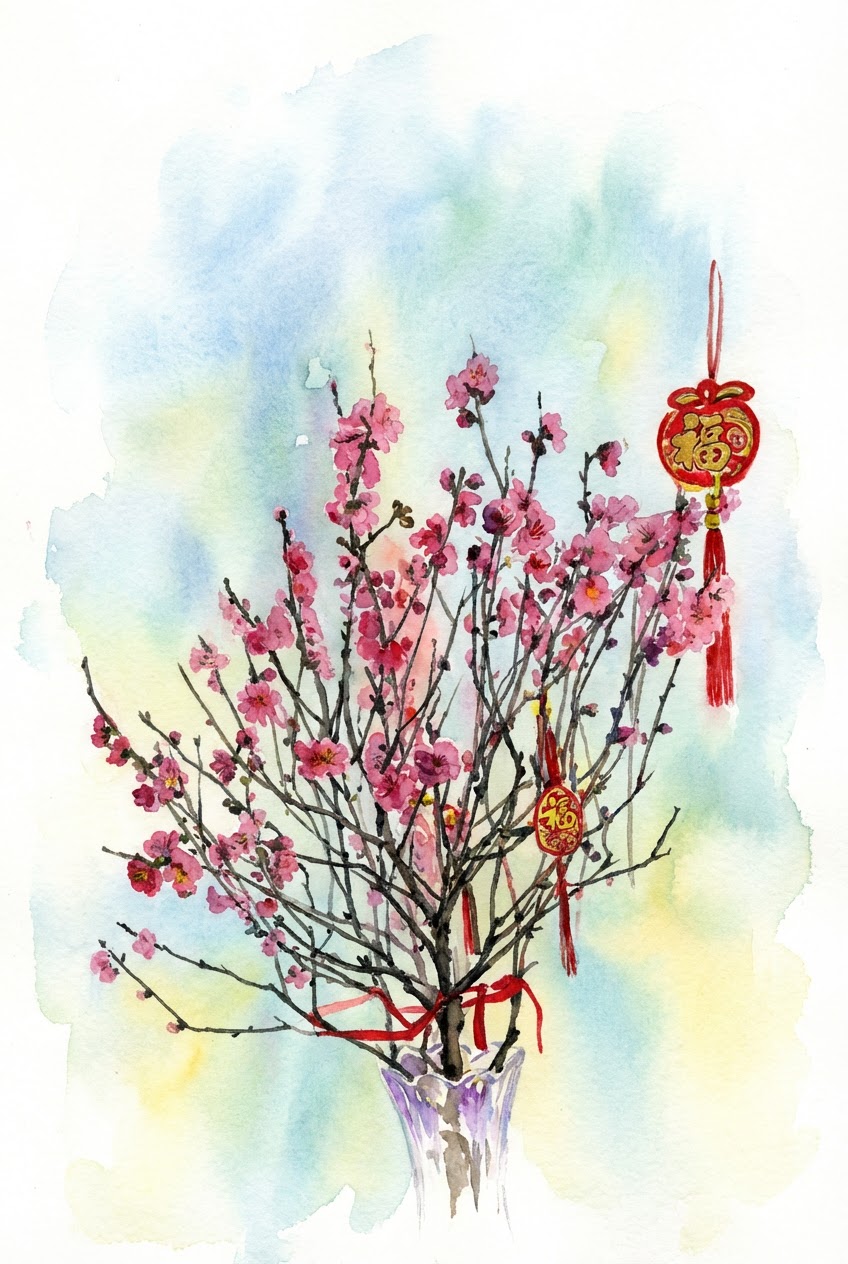
Your peers blossom in a sunlit room,
By curtain, cabinet and New Year’s knot;
They wear the season’s warm and hopeful bloom,
Yet all that lives in time must live and rot.
No sooner do they flower than they fade—
For all that dwells in place must know an end,
And every gift that light and context made
Is but a loan that dying days must lend.
But you are shorn of window, clock and floor,
Against a formless neither-here-nor-there;
Your dark hands hold their pink blooms evermore,
Buds ever-opening, blossoms always fair.
No metaphor, no symbol * left to say—
You simply are, and cannot pass away.
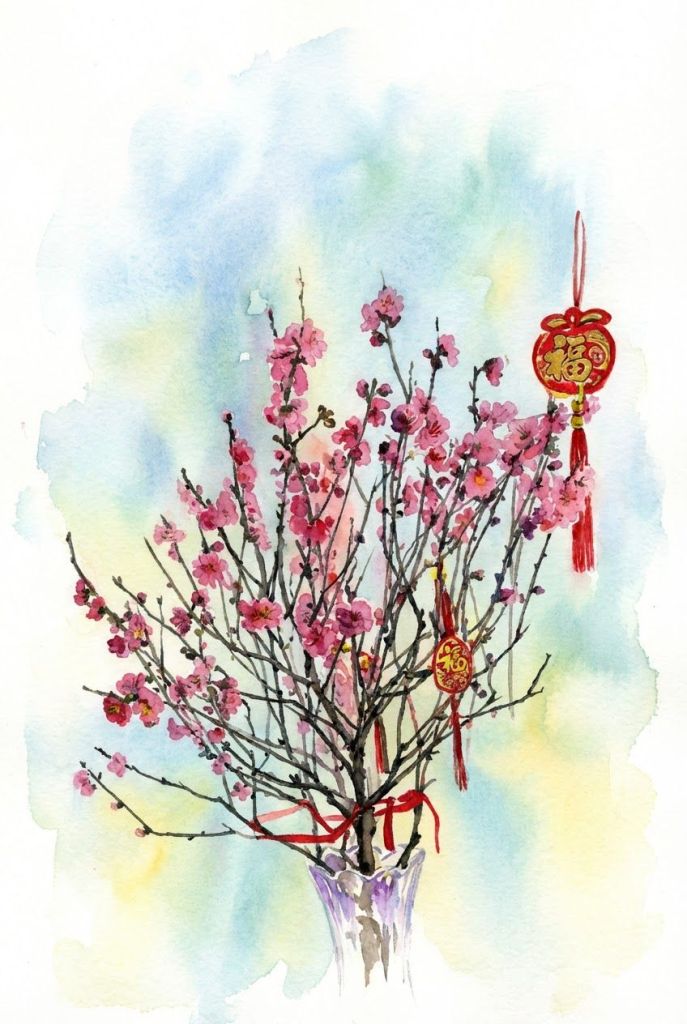
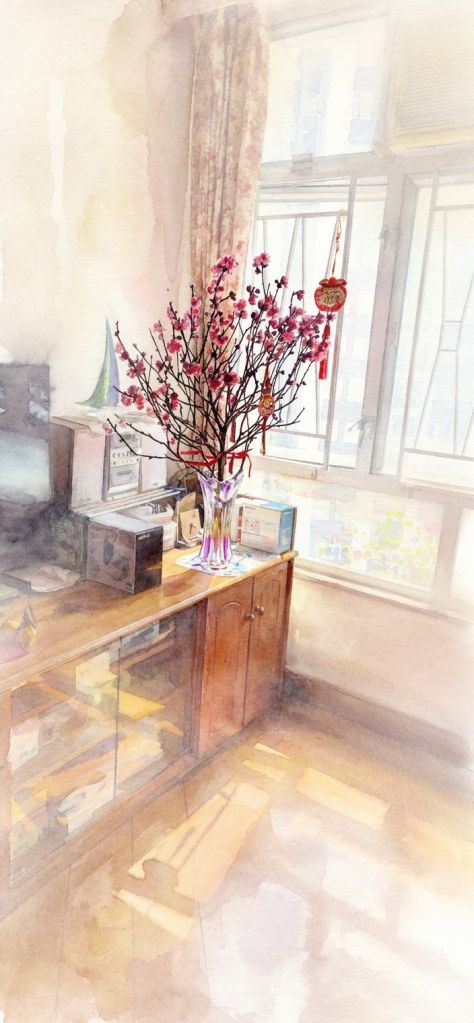
*The plum blossom is celebrated for its resilience against the last onslaught of winter and for presaging the arrival of spring. Hence it is an auspicious plant for Lunar New Year, a symbol of endurance and renewal.
The Quiet Moment of Waiting
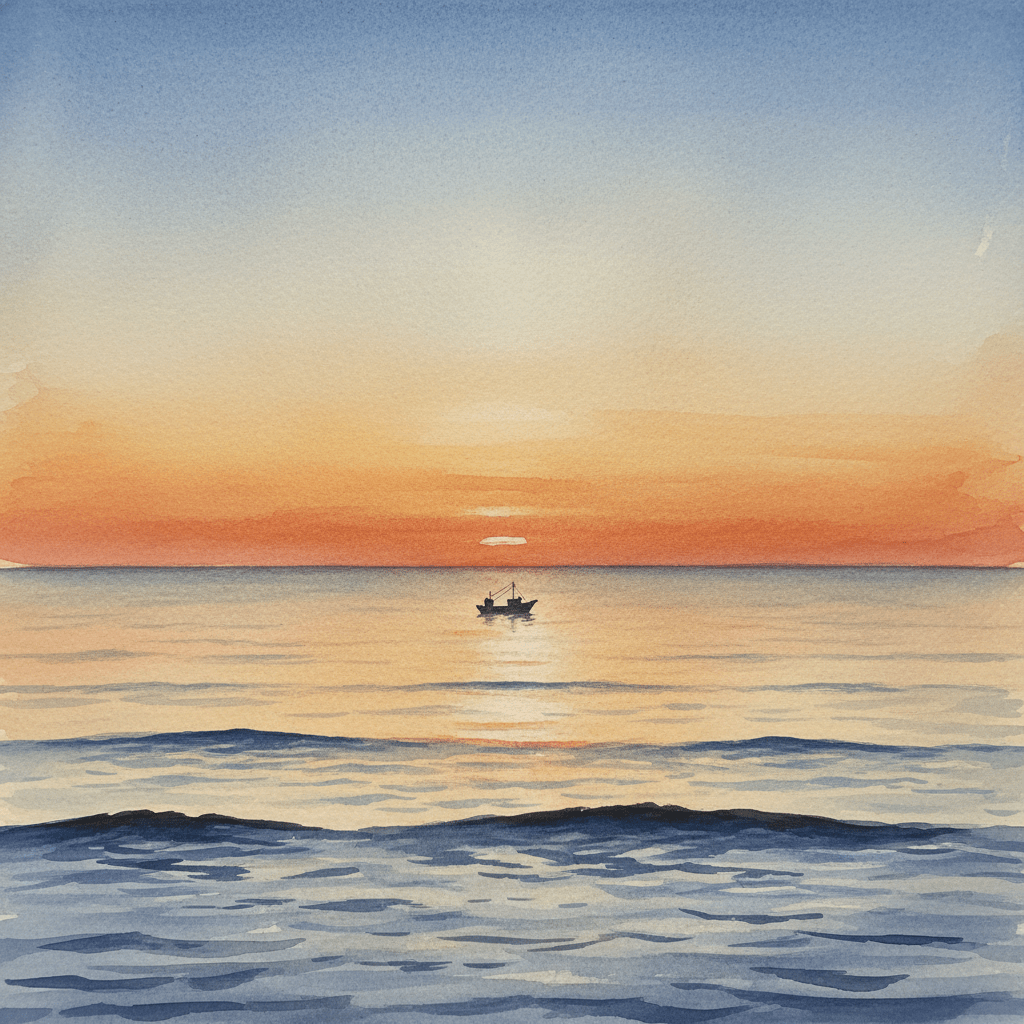
I’m standing in a clinic queue right now—one of the many lines I find myself in every day. You queue for banking, for the bus, at the grocery counter. For such an ordinary experience, I should just take it for granted, the way we take breathing or blinking for granted. But curiously, there’s a sense of something amiss. It feels, in its small way, like suffering. Not the dramatic kind—no one writes tragedies about waiting for your number to be called. But it’s a feeling that clings to the mind like a dull ache, a quiet wrongness you can’t quite name.
It’s a curious cycle. When I’m trapped in waiting, my mind drifts toward the question: what do all these waits actually mean? Perhaps you’ve wondered the same. We’re all waiting for something, always. Waiting for exam results. Waiting for the Chinese new year, when the lucky money comes again. Waiting to hear back after an interview. Waiting for the light to change while running late. Waiting for the bus that never seems to arrive on time.
These tiny waits accumulate into something larger. If we were to add them all up, we’d find that a surprising portion of life is spent in this strange suspension. Present in body, but not quite here. You are leaning forward into a future that hasn’t arrived yet, unable to settle into the moment you’re actually standing in.
What does waiting reveal about us? At its core, it is a confrontation between our desire to be agents of our own lives and the stubborn reality that we cannot bend time to our will. We cannot make the bus arrive faster. We cannot know the outcome of a job interview the moment we walk out the door.
There’s a small ritual of disappointment built into these situations. When you ask, half-hopefully, “When will I hear back?”—and they reply, “Possibly in a month”—something sinks. It’s too long. Too vague. We want certainty, and we want it now. Modern life, in particular, has trained us for immediacy. We refresh the page, check our phones, glance at the clock, as though our attention could somehow hurry things along. Beneath the surface, there’s always a low hum of irritation.
Why does waiting feel so unbearable? Perhaps because we’ve come to see it as wasted time—empty, unproductive, a gap between the moments that actually count. In an age that prizes busyness over stillness, doing over simply being, waiting becomes a kind of failure. It resists usefulness. It refuses to justify itself. And so we treat it as mere transition, something to endure on the way to somewhere else, rather than an experience worth inhabiting on its own terms.
Waiting is often dismissed as empty time, but the quiet suspense between one moment and the next carries its own quiet power. In those pauses—standing in line, anticipating a reply, watching the clock before a new beginning—we are suspended between what was and what will be. This in‑between space invites reflection, heightens awareness, and deepens our appreciation of what finally arrives. While impatience urges us to rush past these intervals, waiting subtly shapes our resilience, teaches us trust in unfolding processes, and reminds us that growth often happens in unseen transitions. The suspense of waiting is not wasted time; it is the threshold where anticipation matures into meaning.
I used to find waiting unsettling, an uncomfortable limbo I wanted to escape. But I’ve since learned to bend toward these pauses, even to welcome them. Waiting resists being “useful” in the conventional sense—if usefulness means actively doing, producing, advancing. Instead, the suspense of waiting invites us into a different kind of attention: a heightened awareness of the present moment itself. These pauses position us in a liminal space between what was and what is yet to come, offering us space to slow down and reflect. Often, the wait isn’t an obstacle delaying our progress but a preparation, priming us for what lies ahead rather than holding us back.
Consider how our lives unfold like stories, shaped by the drift and turn of happenstance. In any good story, the transitions between scenes are rarely empty—they’re filled with authorial asides, atmospheric shifts, internal reflections that enrich the narrative’s texture. These interludes aren’t filler; they’re intrinsic to the story’s meaning. Our waits function much the same way. They give us a window for our own reflections and awareness, a chance to observe rather than simply react. In those moments, you might feel something approaching authorship over your own experience—not because you control what happens next, but because you can step aside from the current, hold yourself at a remove, and simply witness. Here, in the pause, we’re granted permission to be rather than to do, to inhabit our existence rather than relentlessly propel it forward.
Perhaps waiting is, at heart, the experience of standing before a crossing. We wait in order to move into another stage. The traffic light changes, and we cross to the other side of the road. Our number appears on the screen, and it is our turn to see the doctor. Each wait, however brief or mundane, carries the quiet possibility of transition. What follows may become a consequential moment. In this way, waiting stitches together the twists and turns of our lives. If life itself is ritualistic in rhythm, then waiting is not incidental but intrinsic to its design. To cross a threshold is to risk change; once crossed, life may never be quite the same.
Though waiting often feels ordinary—almost woven invisibly into the fabric of daily routine—it matters precisely because it marks the space between “before” and “after.” If we extend this idea further, if we imagine the span of an entire lifetime as a kind of waiting, then the significance deepens. What then of the final crossing — the one we all must cross ? Alfred, Lord Tennyson’s poem ‘Crossing the Bar’ captures this ultimate moment: the crossing from life into what lies beyond. This beautiful poem goes like this:
“Sunset and evening star,
And one clear call for me!
And may there be no moaning of the bar,
When I put out to sea,
But such a tide as moving seems asleep,
Too full for sound and foam,
When that which drew from out the boundless deep
Turns again home.
Twilight and evening bell,
And after that the dark!
And may there be no sadness of farewell,
When I embark;
For tho’ from out our bourne of Time and Place
The flood may bear me far,
I hope to see my Pilot face to face
When I have crost the bar.”
The poem frames death not as an abrupt end, but as a passage—like putting out to sea, borne by a quiet tide toward a hoped‑for meeting “face to face” with the Pilot. In this light, waiting becomes more than delay; it is preparation for crossing. Just as the poet envisions death as a serene transition into another stage of being, so every wait in our lives, small or great, stands as a passage. To wait is to stand at the edge of change—and to trust that on the other side, another chapter awaits.
So, even waiting here at this moment for my number to be called, I’m already crossing.
Unhousing Myself

I’ve been living in a hotel for a few months now, and I’m beginning to see it not as a temporary arrangement but as a possible long‑term way of life. At my age, why should I feel bound to the convention of maintaining a “home” in the traditional sense? If one can afford an extended hotel stay, perhaps it’s worth experimenting with a different mode of living altogether.
When you think about it, a home—despite all its sentimental associations—is also a kind of baggage. I don’t even mean this in a metaphysical way. Quite practically, a home demands upkeep. It requires time, money, and a constant low‑level vigilance: repairs, cleaning, utilities, clutter, the slow accumulation of things you don’t need but somehow keep. A hotel, by contrast, strips life back to essentials. Someone else handles the maintenance. You occupy space without owning it. You move lightly.
There’s also the emotional dimension. As we grow older, perhaps part of aging gracefully is learning to loosen our attachments rather than deepen them. A fixed home can anchor you, yes, but it can also tether you to past versions of yourself—memories, habits, identities that no longer fit. Letting go of that can be a quiet liberation. A hotel room, with its neutrality and impermanence, invites a different relationship to the world: one that is freer, less burdened by history, more open to change.
In that sense, choosing to live in a hotel isn’t an escape from life but a reconfiguration of it. It’s a way of saying: I don’t need walls filled with possessions to feel grounded. I can carry my sense of home within myself.
Where Grief Becomes Language
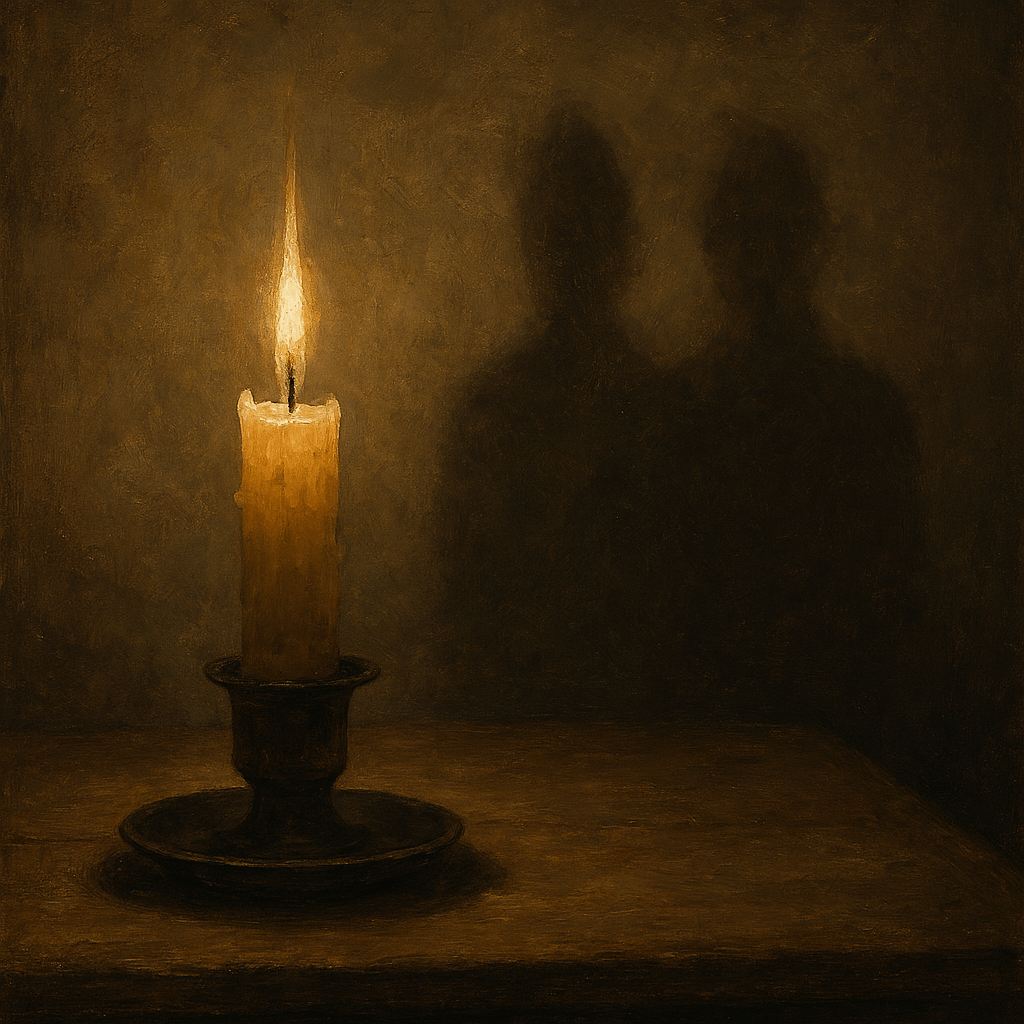
Give sorrow words; the grief that does not speak knits up the o’er-wrought heart and bids it break.
Macbeth, Act 4, Scene 3
Grief often reshapes the way we see art, and sometimes it reveals the hidden stories behind the works we think we know. Reading Hamnet made me reconsider Hamlet not as a monument of genius alone, but as a vessel of private sorrow.
Shakespeare writes Hamlet while still moving through the dense, unspoken fog of losing his son, Hamnet. Agnes, his wife—so attuned to the rhythms of the earth, to the pulse of living things—cannot decipher the way her husband grieves. To her, his composure feels like distance. His return to London, his relentless work on the stage, his immersion in characters and plots all seem like evasions, as though he has shunned their shared sorrow. While she mourns with her hands, her breath, her body, he mourns in silence, in absence, in the strange inwardness of a man who turns pain into language.
For a long time, Agnes believes he has abandoned the grief that has hollowed her out. She imagines him thriving among actors and patrons, untouched by the loss that has reshaped her world. But when she travels to London and sits in the dimness of the theatre to watch Hamlet, something shifts. Onstage, she sees a ghostly father summoned from death, a son who cannot release the past, a family fractured by absence. In those figures—so distant from her life yet uncannily familiar—she recognizes the contours of her own mourning.
Only then does she understand: her husband has not escaped their grief. He has carried it with him, threading it into the fabric of the play. The ghost onstage is not merely a dramatic device; it is the echo of their lost child, the shape of a sorrow he could not speak aloud. Through Hamlet, he has given form to the ache that bound them both. Agnes realizes that the play is not a departure from their loss but an offering—a way of holding Hamnet close, of keeping him alive in the only language Shakespeare knows how to wield.
Art holds a central, almost sacred place in Shakespeare’s life. We often imagine the Bard spinning his plays out of sheer, unbounded imagination, as though genius alone were the source of his creativity. But that view does not quite do justice to the depth of his artistry. In the case of Hamlet, it is grief—raw, bewildering, and transformative—that becomes the true engine of creation. The death of Hamnet does not silence Shakespeare; instead, it is transmuted, refined, and sublimated into one of the greatest tragedies ever written.
The beauty of art, in this sense, proves more enduring than any epitaph or ritual gesture. A gravestone marks a life; a play reanimates it. Through Hamlet, Shakespeare not only memorializes his son but also inscribes himself into the fabric of cultural memory. The tragedy becomes a double act of preservation: the child who died young and the father who mourned him both find a kind of immortality in its lines.
Language becomes the vessel through which grief is transformed. Instead of loud cries or outward displays of sorrow, the pain distills into quiet, resonant meditations on death, memory, and the fragile condition of being human. The play’s reflections—its ghosts, its hesitations, its questions—carry the weight of a father’s loss without ever naming it directly.
In this way, art becomes a means of transcending death. What is lost in life is carried forward in language. What cannot be restored in the world is reimagined on the stage. Through the alchemy of creativity, Shakespeare turns grief into something enduring, something that continues to speak across centuries. And in that transformation, both he and Hamnet step beyond the limits of mortality.
The Mythic Life of Ordinary Days

When you wake up—still half‑lost in sleep—you shuffle to the kitchen and make a cup of coffee. You pull back the curtain. Sunlight spills in. It’s a tiny ritual you perform every morning without a second thought.
But here’s a question: have you ever noticed that you’re actually starting to re-enacting a host of ancient myths that follow later in the day.
I’m serious.
To begin with, you pull yourself out of sleep, that strange in‑between place where dreams wander off on their own and nothing quite makes sense. As you open your eyes, the room slowly comes back. The contours of things reappear. The world, which completely disappeared for the whole night, quietly takes shape again.
Then you put on your “day self”. The part of you that knows who you are, what day it is, and what needs doing. The dreamy nocturnal part fades into the background, and your thinking mind puts back in gear.
And without really noticing it, you’ve just done something very old.
In ancient Egyptian myth, the sun god Ra rises each morning to bring light and order back into the world. Your version starts when you turn off the alarm. Chaos gives way to form. Darkness gives way to direction. A new day begins — not with a fanfare, but with a sleepy decision to get up.
So you might be thinking, ‘okay, this is a cool parallel… but so what?’
The “so what” is that what happens inside you—the small, intimate world of your feelings—isn’t separate from the big patterns of life at all. Every culture has stories of loss, transformation, and renewal because those movements happen everywhere: in seasons, in ecosystems, in the rise and fall of worlds. And they also happen in us. The microcosm mirrors the macrocosm.
When you feel completely undone—when you grieve the loss of someone you love—it can feel like a descent into an underworld. That inner journey, as personal as it feels, echoes a much larger rhythm. Our ancestors recognized this long ago. They noticed the same patterns playing out in nature and in the soul, and they wove that understanding into myths and rituals.
Those stories are like maps of the inner landscape. They remind us that what’s happening inside us isn’t random or meaningless—it’s part of a cycle that has been lived, named, and remembered many times before. And when you realize that, you’re no longer just stuck inside your own pain. You’re standing at the meeting point of the small world and the great one, able to draw on a deep, ancient wisdom as you find your way through.
You begin to realize that your journey is more epic than you ever gave it credit for. Something shifts when you see this: you’re not just someone enduring a hard moment, you’re a hero in your own right—no less real than any figure from a Greek tragedy.
When you descend into your own underworld, you’re not failing or falling behind. You’re in the middle of the story. You’re shaping it as you go, even if it doesn’t feel graceful or heroic right now. And this moment—this dark, uncertain stretch—isn’t the end. It’s a chapter in motion, a passage between what was and what’s still becoming.
You don’t need to watch Greek drama or read classical epics to appreciate the epic scale of human experience or grasp the depths of the tragic human condition. These grand narratives exist within each of us, playing out in our daily lives. While Greek dramas and epic poems certainly create magnificent spectacles that amplify our sense of awe and pity through their larger-than-life heroes and cosmic stakes, we ordinary people possess all the same essential elements of human dignity and struggle. Our lives contain the same fundamental conflicts, desires, and moments of profound significance, even if they unfold on a smaller, more intimate stage.
This recognition has become especially pronounced in modern times, where we have developed a profound appreciation for the individual as sacred and sovereign. The democratic spirit of modernity insists that every person’s inner life matters, that every consciousness is worthy of deep attention and respect. We no longer believe that only kings and warriors merit epic treatment; the checkout clerk, the teacher, the office worker—all carry within them the weight of human experience.
If you examine modern schools of the novel, you’ll discover how authors understand that ordinary people repeat and re-enact the ancient myths, embarking on grand journeys even when they never leave their hometown. James Joyce’s Ulysses provides perhaps the most famous example. The novel’s protagonist, Leopold Bloom, simply potters around Dublin on an ordinary Thursday in June 1904. His journey deliberately mirrors that of Odysseus returning home to Ithaca after the Trojan War, but instead of battling Cyclops and resisting Sirens, Bloom attends a funeral, buys soap, eats lunch, and navigates the complexities of his troubled marriage.
For all the mundane activities that fill Bloom’s Thursday—getting breakfast, visiting the newspaper office, going to the public baths—he encounters events and moments of surprising depth and resonance. He confronts his personal history, including his grief over his infant son’s death and his anguish over his wife’s infidelity, all within the larger context of Irish history and the struggle for national identity. Joyce demonstrates that Bloom’s journey through Dublin is no less grand, no less heroic, and no less worthy of epic treatment than Homer’s Odysseus sailing across the wine-dark sea. The interior landscape of a single human mind on a single day contains multitudes.
The remarkable thing is that you don’t need to be consciously aware that these myths are shaping your life—they’re already embedded in your psychology, operating beneath the surface of your awareness. Over the course of human culture spanning millennia, these archetypal patterns and stories have been passed down through generations, depositing themselves in the depths of our minds where we cannot directly perceive them. They function like invisible scaffolding, providing an unconscious framework that helps us organize our experiences and derive meaning from the chaos of daily existence. We live out these patterns without realizing it, our choices and responses echoing the ancient stories our ancestors told around fires thousands of years ago.
But something transformative happens when we become aware of these mythic undertones running through our lives. This awareness creates what we might call psychological gravitas—a weight, a depth, a sense of significance that elevates our understanding of ourselves. When we recognize the mythic dimensions of our experience, we suddenly possess a vocabulary and a structure for understanding what happens to us and what we do. The random-seeming events of our lives begin to cohere into patterns; we can see ourselves as protagonists in an ongoing story rather than merely drifting through disconnected moments.
This consciousness fundamentally changes our relationship to meaning-making. Instead of passively receiving whatever significance our culture assigns to our actions, we can actively participate in creating our own meaning. As we carve out purposes for our life journey and make deliberate choices about the direction we want to move, cognition of these innate mythical elements provides us with a pathway—a method for consciously constructing meaning rather than stumbling upon it accidentally. We become both the author and the hero of our own story, aware of the ancient patterns we’re working with and capable of adapting them to our unique circumstances and aspirations.
Deserted Rural Houses
Stories Carried Forward — An Introduction
In many families, the most enduring stories are not the ones that end well, but the ones that fall silent—stories marked by absence, disappearance, and unanswered waiting.
These tales were written by my brother James some years ago, recounted to him in childhood by our father. James has always been someone who prefers to hold his writing close, treating it as a private experience rather than something to be shared with the world. Yet when he read the ghost story on my blog, something shifted. He found it deeply moving—as he told me in a WhatsApp message—and it stirred memories of these sad stories he had written down years ago, preserving our father’s voice and the voices before him.
What binds our stories together is not merely that their protagonists have evolved into mythical figures across generations of retelling. Rather, it is how these tales lay bare the human condition itself: ordinary people pitted against the inexorable forces of destiny, revealing in their struggles the full spectrum of hope and despair, dignity and frailty. These are not heroes in any conventional sense, but their very ordinariness makes their courage—and their losses—all the more profound.
I needed little persuasion to convince James to share these stories on my site. As is often the case, only the writer themselves knows best how to capture the rawness of feeling, the particular cadences and nuances that give life to memory. In its natural flow of language and unassuming style of narration, James’s text carries within it not just the stories themselves, but the act of their transmission—father to son, one generation passing tales on to another. As I told him, “The way you recount these episodes, they already possess the fullness of a story, and they have inspired me deeply.”
In both his tales and mine, we find ourselves bound more closely by the ancient, familial gravitas of storytelling. They take us back to an earlier time, when people gathered around firesides not merely to pass a long winter night, but to make sense of their lives through the tales they told—what it means to be human: our vulnerabilities and strengths, our losses and our endurance. By recounting these stories of the past, James honours not just our own family’s history, but the universal experience of migration, separation, and the terrible lottery of fortune that shapes all human lives.
_______________________________
What follows is James’s story, told here verbatim
1 February 2021
When you hear someone mention Toishan — a sleepy, obscure rural area tucked away at the southern tip of Kwangtung Province, China– you might immediately conjure up a picture of the many Chinatowns across the U.S. In the 19th century and the early 20th century, if you roamed around any Chinatown in the U.S., your eardrums would be invaded not by English but by a dialect peculiar to Toishan. What was a relatively obscure, rustic dialect spoken by a limited number of Chinese people was elevated to the status of a national language in the U.S. Chinatowns. This was testimony to the dominant role played by Toishan natives in the U.S. Chinatowns. Times may have changed but the stamp left by the people from Toishan is visible throughout the Chinatowns apart from the popular spoken language. The commercial businesses, which are essentially small eateries, laundries and grocery stores, are replicas from Toishan. The Toishanese, after gaining their footing in the U.S., began to send remittances back home to their loved ones whom they left behind in their hometown. These village people, who have connections with overseas relatives in the U.S. are the envy of all the people in the district. They are well-off with regular remittances from the U.S. They began to build houses and villas, turning Toishan into a picturesque place. Toishan, though obscure and backward in the first place, has gradually achieved the status of a wealthy county thanks to remittances sent home from the overseas Toishanese in the U.S. Outwardly, the Toishanese should take pride in their economic achievement. But behind each success story, there may be untold miseries which tend to mitigate the joy of success. Why did so many Toishanese turn their back on their homeland and brave the hazards of the sea to seek their fortune in the U.S. in the 19th century? Their struggles were well mixed with blood, sweat and tear.
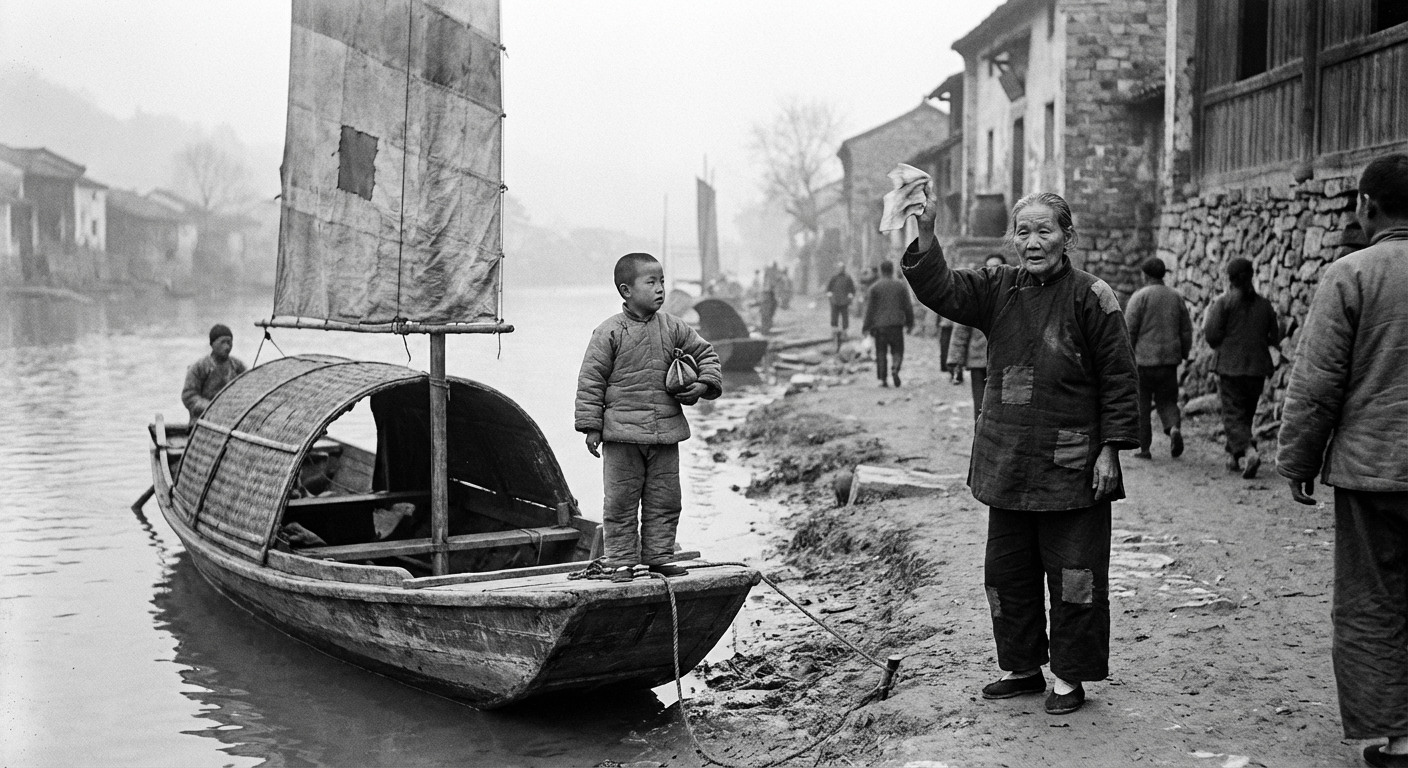
A farming community could thrive on its agricultural produce. Staples such as rice and wheat and cash crops like vegetables and fruit would sustain the community generation after generation. When life is well- off, the idea of seeking a greener pasture elsewhere by moving away or by emigration would be remote on people’s minds. That so many Toishanese chose to leave their hometown in pursuit of a better life elsewhere just serves to pinpoint the harsh physical realities of the community. Arable land is limited and infertile. Much of the terrain is hilly, making crop cultivation difficult. In front of the villages, Tam Kong – a tributary of the Pearl River – is shallow and fisheries are out of the question. It’s hard to eke out a bare existence. In reaction to the hostile physical environment, emigration has become a means of survival. In those days when travelling abroad was mainly done by sea, braving the gruelling long voyage across the Pacific or the Atlantic in dilapidated boats was highly hazardous, as can be imagined. The travellers were constantly at the mercy of the stormy seas and the inclement weather. Historical records of boats or ships sunk during the voyages are unavailable and are only left to imagination. It needed superhuman courage for people to make such a hazardous sea voyage in the first place. Stories of miseries, separation and bereavement consequent upon leaving one’s hometown in pursuit of a better life abroad abound in the memories of the older generation. I remember my father telling me many such sad stories when I was a child. Keung Chai, a child of ten, lived alone with his elderly grandmother in a small dilapidated village house. Grandma, being too old for any hard farm work to sustain herself and her grandson, fervently hoped for an opportunity for Keung Chai to escape the oppressive , harsh reality of life. She had a distant relative living in the U.S. It was arranged that the boy should go to America to try his luck for a better life. Separation between Grandma and child was indeed heart- rending. To keep a small, helpless child at home was tantamount to a bleak future. To let a child go into the wide world on his own was full of unforeseen hazards. Grandma and the boy kept weeping at the heart-breaking prospect of separation. The hour of separation finally came. With a small bundle containing some old clothes slung on his back, the child and his Grandma sat listlessly outside the house, awaiting the boat to arrive. From time to time, Grandma would send the boy to the riverside to see whether the boat had come. When the boy came back and shook his head, Grandma would again collect the boy into her arms and covered his face with kisses while her tears would trickle uncontrollably down her wrinkled cheeks like streams. Finally the boat came to take the boy away on his unknown quest for a better life in the U.S. There was one final hug. Both Grandma and the child were too overcome with emotions to speak any words. Only the chests of the two were seen heaving up and down uncontrollably. Both might hope for a reunion sometime in the future. But such happiness would forever elude them. Grandma followed Keung Chai to the riverside, limping all the way. The boy was distress-stricken at the imminent separation from Grandma, who was all the world to him. From time to time, Grandma pressed the boy’s hand to cheer him up. ‘The world is before you, my child,’ she said gently. ‘Work hard and be kind. You’re sure to have a promising future in the States. Don’t bother about me. I’m old but I’m only too glad to see you well settle down in a happy land. Take this to heart: your happiness means the whole world to me, my dear.’ So saying, they soon found themselves at the riverside, where the boat was awaiting. Keung Chai stepped on to the boat, wiping away tears with the back of his hand. Grandma was at pains to fight back tears and force a smile to encourage the boy, summoning all her willpower to suppress her misgivings about the possible eternal farewell. The boat was now slowly steering away with Keung Chai standing on the prow waving goodbye to Grandma. ‘Take good care of yourself, Grandma. I’ll send you word as soon as I arrive,’ the boy shouted at the top of his voice. Grandma was rooted at the riverside, waving back to the boy. They kept waving to each other until the boat vanished into a dot over the horizon.
Grandma tore herself home from the riverside, aided by one or two fellow villagers. She kept oscillating between hope and distress. At one moment, she was hopeful. She pictured to herself that Keung Chai would make his way upward in life and she would be so proud of him. But the next moment would see her plunge into the nadir of despair: after all, the path forward for the boy was only too uncertain. Very soon weeks turned into months and months into years but still there was no news whatsoever from Keung Chai. Every afternoon, at the expected time when the postman would pass the village, Grandma would seat herself outside the house longing for the postman to appear. She would be lighted up with hope when she saw the postman from afar. Her heart kept pounding violently. ‘Let there be something from Keung Chai this time,’ she prayed. Her eyes would go wild with expectation. But every time, she was let down. Her hope of the day was shattered. The postman seemed to be able to read her mind. He said kindly, ‘ No, Grandma. There may be good news tomorrow.’ Grandma forced a smile and looked her thanks. She turned back into lonely house and wept bitter tears: the hope of the day was once more shattered. Day after day the same process would be repeated. Oppressed by old age and tormented with a broken heart, Grandma soon passed into eternity. With her passing, the house soon crumpled and fell into ruins. There was an eerie silence about the place. Occasional passers-by would point to the house and sigh, ‘Providence was so cruel to the kind old lady and her innocent Keung Chai. What have they done to deserve this miserable fate?’ Equally eerie was the mystery surrounding Keung Chai’s whereabouts. Did he make it to the U.S. despite the hazardous voyage? Was he drowned in the sea? Was he kidnapped and trafficked to some unknown place? The answer is anybody’s guess. The truth of the matter is that Keung Chai has never been heard of anymore since the day he boarded the boat that was supposed to take him to the U.S. There is so much sadness about the story. Misfortunes associated with poverty were rife in those days. Grandma and Keung Chai’s story is not unique: similar stories abound, as handed down from my parents. They all attest to one common culprit: stark poverty, which forces men to try all means to better their lot. In their struggles against adversity, courage and perseverance, though of utmost importance, may not alone help them come off triumphant : some favour from Providence is essential. But how Providence presents itself in your favour defies human understanding. It is intangible, invisible and its existence cannot be verified by science. Somehow you feel that it exists in this world in one form or another. Again, why some people are well- favoured by Providence while some fare badly is another problematic issue. It is independent of character. ‘God’s will will be done.’ That, perhaps, should be our attitude in dealing with human affairs which in many cases defy explanations or logic and boil down to mysticism. In the case of Keung Chai, had things gone according to plan, a different story might have been handed down to posterity. But their plan didn’t materialize and sadness ensued. There is no lack of similar sad stories of lifelong separation, disappearance, decay, death, hard labour and wretched lives exerted on the Toishanese through extreme poverty, as recounted by the village elders.
Further down the alley from Grandma and Keung Chai’s house – round the village corner facing the river – there stood another ruined house overgrown with wild grass. Some of the walls had crumbled. The doors were all half broken. Wild dogs ran in and out of the house through the broken doors, rummaging around for food. The house was infested with rats, cockroaches, snakes and other harmful insects. An eeriness reigned inside the house. Village people dreaded approaching the house. They would quicken their steps when their way led them past the house. Yet don’t forget that it was once a brand-new home for a couple, newlywed. Ah Ying, a young bride of 20, was from a neighbouring village. The bridegroom, Ah Ming, was two years her senior and made a living by selling home-grown vegetables in the marketplace. Life was quiet and peaceful for the young couple. They loved each other dearly though in those days arranged marriage was the norm. Happiness does not necessarily involve wealth as a prerequisite. Ah Ying and Ah Ming, though leading a humble life, were by far happier than most who lived in more affluent circumstances. They found great solace in each other’s love. They were the envy of the village. We all yearn for a life of peace and contentment. But humanity seldom triumphs over the attraction of wealth and prosperity. Gradually, Ah Ming found out that some fellow villagers were getting better and better in their financial circumstances through receiving remittances from their relatives in foreign countries, especially the U.S. He began discussing with Ah Ying, ‘We would most likely end up living a poor life by continuing with our present circumstances. You can see some of our fellow villagers are becoming more and more well-off through receiving remittances from their relatives abroad. Why don’t we do the same? I’m young and as capable as many other people. Let me go to the U.S. Once I get a footing there, I’ll send you over and we’ll have a happily- ever-after. Ah Ying, being a simple-minded girl, was very much delighted at the prospect of a grand future in the U.S. – the Gold Mountain, as it was generally called at the time. To undergo the pain of a short separation from her beloved would pale in comparison with the promise of a happily-ever- after. So it was arranged that Ah Ming would leave for the U.S. in quest for a promising future as soon as a ticket for the ocean-going vessel was available. But alas! Just like the case of Keung Chai, Ah Ming was never heard of again once he left the village and his young wife. What had actually happened to him was again anybody’s guess. There were rumours that he had fallen into bad company when he landed at the Chinatown in San Francisco. He took to drinking and gambling and soon ruined himself. Chinatown was a den of vices at the time. Many a young lad from China was led astray and ended up in wretchedness. The aspiration for a beautiful life in the U.S. vanished into thin air. Meanwhile, back at home Ah Ying languished at the long absence of Ah Ming. She was pining away. Hope turned into anxiety and anxiety translated into desperation, which was far worse than destitution. Ah Ying, a young bride of 20, had practically become a widow with Ah Ming’s mysterious disappearance in the U.S. Soon she passed into middle age and looked much more aged than her real age. She died of a broken heart long before she reached her old age. The house, like the one once occupied by Keung Chai and his Grandma, soon grew desolate and fell into ruins. Houses without a human presence usually share the same fate : when a house is inhabited, cooking and other human activities keep it vibrant. It is kept clean and well maintained. When it is deserted, moisture and dust would set in. Insect infestations soon arrive in their wake and that spells its demise. Ruined houses dotting the villages here and there in Toishan all tell more or less a similar story like that of Keung Chai or that of Ah Ming. Sad stories certainly they were. Yet in the same village, you will also see grand houses filled with fruit trees and hear the merry laughters of children within. These are prosperous households. They are prosperous through the good fortune of their loved ones making a successful life in the U.S. They are not necessarily superior to Keung Chai and Ah Ming. But one thing they excel over Keung Chai and Ah Ming is that they are better favoured by fortune. That’s why they prosper, to the great joy of their families while Keung Chai and Ah Ming failed to make their way in the world, bringing their families into ruin. Thus within the same village, decay and regeneration stand in stark contrast to each other, attesting to the vicissitudes of human fate.
– End of story –
Continue reading “Deserted Rural Houses”
