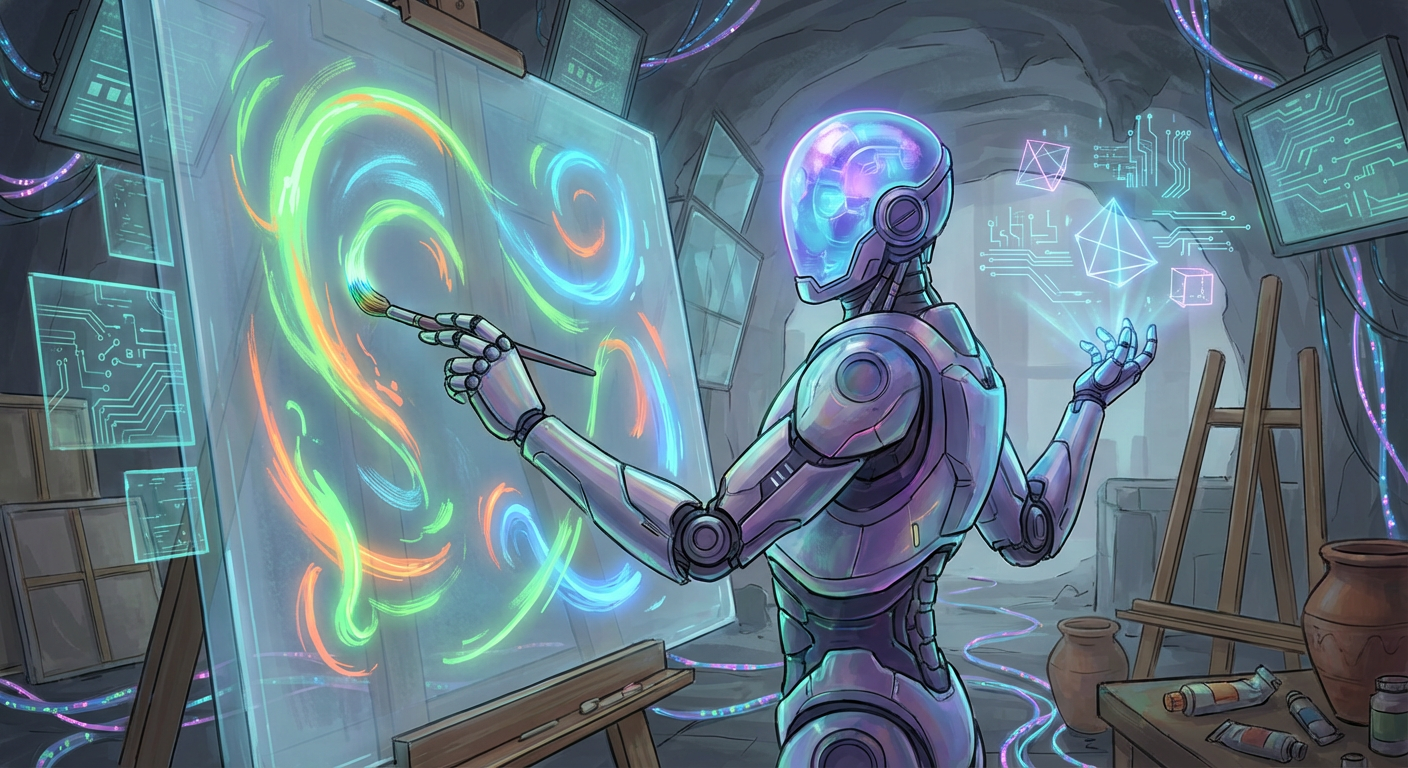
The definition of what it means for something to be “creative” often depends on perspective. Artificial intelligence has demonstrated its ability to compose music, write stories, and create visual art with such innovation and quality that its work can often be mistaken for that of a human. However, the process through which AI generates these creations is fundamentally different from human creativity. AI relies on identifying patterns within vast datasets and predicting what comes next, rather than drawing from personal experience or intention. It does not possess a mind of its own. For this reason, many argue that AI’s outputs, no matter how impressive, cannot truly be considered creative.
Those who assert that consciousness is a prerequisite for creativity often emphasize the role of subjective experience in the creative process. Why does a poet create the way they do? The focus on a particular theme, along with their selection of words and imagery, is part of a poet’s conscious effort to achieve specific effects or evoke a desired emotional response. These choices are guided by their individual experiences, intentions, and desires. From this perspective, AI falls short of qualifying as a true creator. It lacks consciousness, personal experience, and any innate desire to create. Consequently, critics argue that AI’s outputs, no matter how sophisticated or seemingly innovative, are merely the results of computational processes—imitative rather than original.
We judge creativity in a piece of work by evaluating whether it embodies the elements that define creativity. For something to be considered creative, it must be innovative and depart from conventional modes of representation. Creativity often surprises or even inspires awe, emerging in various forms—whether through combining familiar concepts in novel ways, pushing the boundaries of a particular field, or breaking completely from tradition to create something entirely new. Importantly, these judgments don’t require us to understand the inner life or consciousness of the creator. What matters is the experience the work offers us—the sense of originality and transformation it brings.
In this regard, AI is fully capable of producing creative work. Advanced language models, for example, can generate writing that rivals, and sometimes even surpasses, the creativity of the human mind. They can weave together ideas, experiment with language, and produce compositions that feel fresh and original, demonstrating that creative output doesn’t necessarily depend on consciousness.
Consciousness drives much of what humans do. It is the lens through which we understand our actions and the reasons behind them. Historically, creativity has been seen as a product of conscious effort—a uniquely human trait rooted in thought, intention, and personal experience. But with the advent of artificial intelligence, we are being challenged to rethink whether creativity must remain tied to the human mind. While human creativity is undeniably driven by consciousness, this alone does not automatically disqualify AI from being capable of creative expression.
When we admire a painting or listen to a piece of music, our primary interaction is with the work itself—its colours, composition, melody, or emotional resonance. Rarely do we stop to question the consciousness or inner life of its creator. What captivates us is the transformative and thought-provoking nature of the work, its originality, and its ability to elicit an emotional or intellectual response. In fact, our appreciation of creative works often begins and ends with the experience they provide. While understanding the creator’s intent or mental process may deepen our appreciation, it is not a necessary condition for judging a work as creative. In this sense, creativity can exist independently of conscious effort, as long as the output meets the criteria of being innovative, meaningful, and aesthetically or intellectually significant.
This shift in perspective invites us to see creativity not as something exclusively rooted in human consciousness, but as something that can emerge from other processes as well. AI, for instance, does not create out of personal intention or desire, but it is capable of producing outputs that demonstrate novelty and originality. If an AI-generated piece of art or writing can move us, surprise us, or provoke new ways of thinking, then it has fulfilled the same purpose as a human creation. Creativity, therefore, does not need to originate solely from human thought. It can be judged by the quality and impact of the work itself, regardless of how or by whom it was created.
We often associate creativity with human thought processes, assuming that only humans can truly create because only humans can think. This association has led us to reserve the concept of creativity exclusively for human efforts. However, AI challenges this assumption. While AI may not feel the urge to create or possess a conscious mind, its output can nonetheless be as creative as that of humans. An AI does not need to replicate the human experience of creativity in order to produce work that is innovative or transformative. By broadening our definition of creativity to focus on what rather than how, we can recognize that AI is not merely a tool, but a potential contributor to the evolving landscape of creative work.
In conclusion, creativity should not be limited to the confines of human consciousness or intent. While traditional notions of creativity have long been tied to subjective experience and conscious effort, the advent of artificial intelligence challenges us to rethink these assumptions. AI, though lacking personal desire or awareness, is capable of producing works that are innovative, transformative, and thought-provoking—qualities that define creativity itself. By shifting our focus from the creator to the output, we can recognize AI’s contributions as both valid and creative. As we move further into an era where technology and human ingenuity intersect, it is essential to embrace a broader and more inclusive understanding of creativity—one that acknowledges the potential of AI to expand the boundaries of what is possible in art, literature, and beyond.
 Site Title