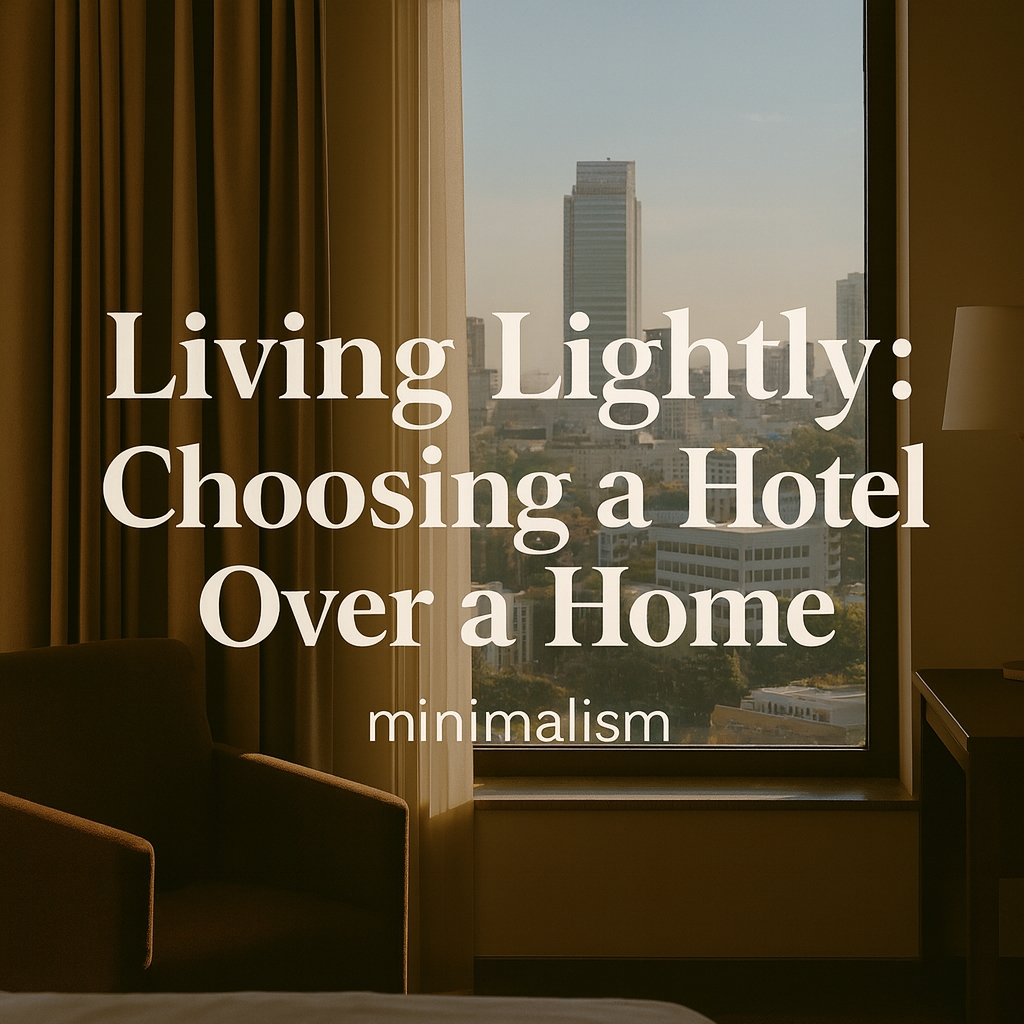
I’ve been living in a hotel for a few months now, and I’m beginning to see it not as a temporary arrangement but as a possible long‑term way of life. At my age, why should I feel bound to the convention of maintaining a “home” in the traditional sense? If one can afford an extended hotel stay, perhaps it’s worth experimenting with a different mode of living altogether.
When you think about it, a home—despite all its sentimental associations—is also a kind of baggage. I don’t even mean this in a metaphysical way. Quite practically, a home demands upkeep. It requires time, money, and a constant low‑level vigilance: repairs, cleaning, utilities, clutter, the slow accumulation of things you don’t need but somehow keep. A hotel, by contrast, strips life back to essentials. Someone else handles the maintenance. You occupy space without owning it. You move lightly.
There’s also the emotional dimension. As we grow older, perhaps part of aging gracefully is learning to loosen our attachments rather than deepen them. A fixed home can anchor you, yes, but it can also tether you to past versions of yourself—memories, habits, identities that no longer fit. Letting go of that can be a quiet liberation. A hotel room, with its neutrality and impermanence, invites a different relationship to the world: one that is freer, less burdened by history, more open to change.
In that sense, choosing to live in a hotel isn’t an escape from life but a reconfiguration of it. It’s a way of saying: I don’t need walls filled with possessions to feel grounded. I can carry my sense of home within myself.
Unhousing Myself
 Site Title