Stories Carried Forward — An Introduction
In many families, the most enduring stories are not the ones that end well, but the ones that fall silent—stories marked by absence, disappearance, and unanswered waiting.
These tales were written by my brother James some years ago, recounted to him in childhood by our father. James has always been someone who prefers to hold his writing close, treating it as a private experience rather than something to be shared with the world. Yet when he read the ghost story on my blog, something shifted. He found it deeply moving—as he told me in a WhatsApp message—and it stirred memories of these sad stories he had written down years ago, preserving our father’s voice and the voices before him.
What binds our stories together is not merely that their protagonists have evolved into mythical figures across generations of retelling. Rather, it is how these tales lay bare the human condition itself: ordinary people pitted against the inexorable forces of destiny, revealing in their struggles the full spectrum of hope and despair, dignity and frailty. These are not heroes in any conventional sense, but their very ordinariness makes their courage—and their losses—all the more profound.
I needed little persuasion to convince James to share these stories on my site. As is often the case, only the writer themselves knows best how to capture the rawness of feeling, the particular cadences and nuances that give life to memory. In its natural flow of language and unassuming style of narration, James’s text carries within it not just the stories themselves, but the act of their transmission—father to son, one generation passing tales on to another. As I told him, “The way you recount these episodes, they already possess the fullness of a story, and they have inspired me deeply.”
In both his tales and mine, we find ourselves bound more closely by the ancient, familial gravitas of storytelling. They take us back to an earlier time, when people gathered around firesides not merely to pass a long winter night, but to make sense of their lives through the tales they told—what it means to be human: our vulnerabilities and strengths, our losses and our endurance. By recounting these stories of the past, James honours not just our own family’s history, but the universal experience of migration, separation, and the terrible lottery of fortune that shapes all human lives.
_______________________________
What follows is James’s story, told here verbatim
1 February 2021
When you hear someone mention Toishan — a sleepy, obscure rural area tucked away at the southern tip of Kwangtung Province, China– you might immediately conjure up a picture of the many Chinatowns across the U.S. In the 19th century and the early 20th century, if you roamed around any Chinatown in the U.S., your eardrums would be invaded not by English but by a dialect peculiar to Toishan. What was a relatively obscure, rustic dialect spoken by a limited number of Chinese people was elevated to the status of a national language in the U.S. Chinatowns. This was testimony to the dominant role played by Toishan natives in the U.S. Chinatowns. Times may have changed but the stamp left by the people from Toishan is visible throughout the Chinatowns apart from the popular spoken language. The commercial businesses, which are essentially small eateries, laundries and grocery stores, are replicas from Toishan. The Toishanese, after gaining their footing in the U.S., began to send remittances back home to their loved ones whom they left behind in their hometown. These village people, who have connections with overseas relatives in the U.S. are the envy of all the people in the district. They are well-off with regular remittances from the U.S. They began to build houses and villas, turning Toishan into a picturesque place. Toishan, though obscure and backward in the first place, has gradually achieved the status of a wealthy county thanks to remittances sent home from the overseas Toishanese in the U.S. Outwardly, the Toishanese should take pride in their economic achievement. But behind each success story, there may be untold miseries which tend to mitigate the joy of success. Why did so many Toishanese turn their back on their homeland and brave the hazards of the sea to seek their fortune in the U.S. in the 19th century? Their struggles were well mixed with blood, sweat and tear.
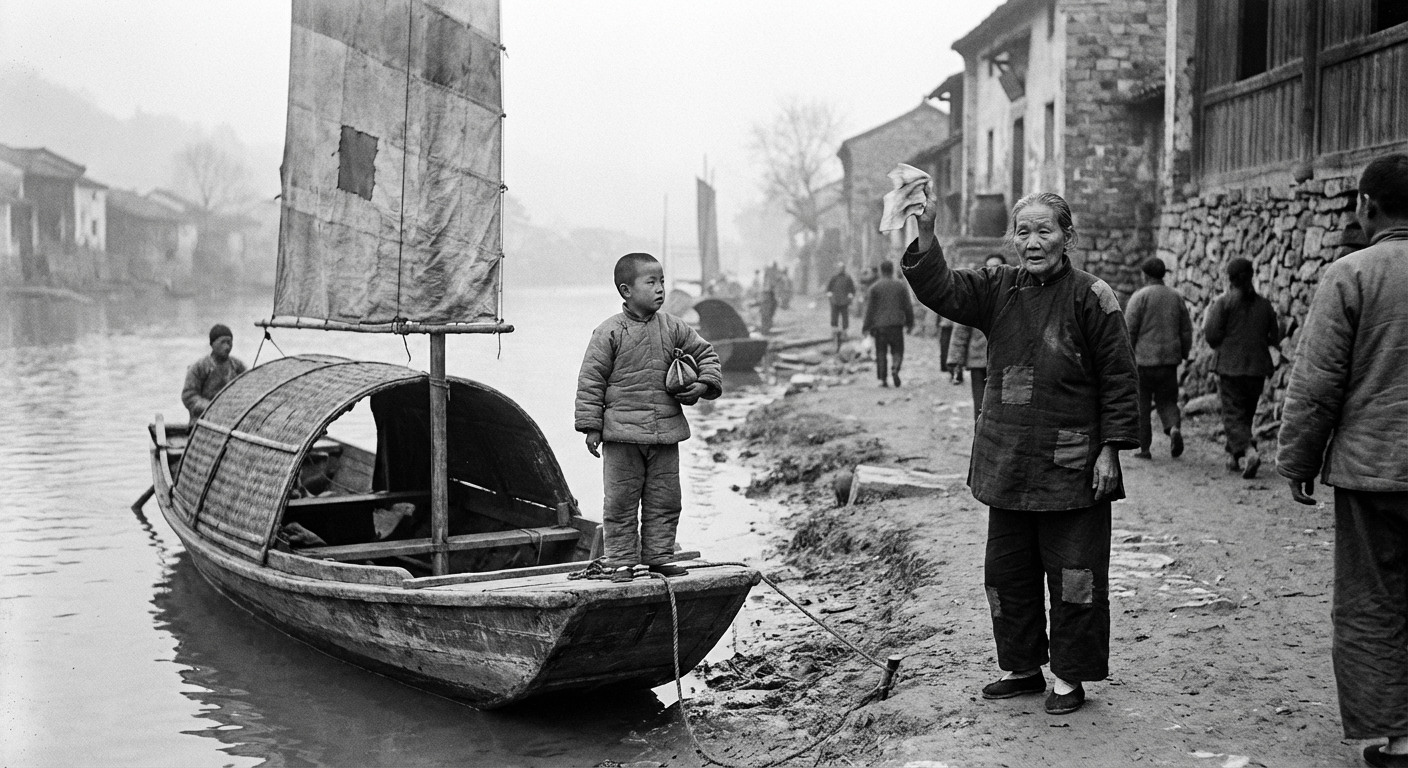
A farming community could thrive on its agricultural produce. Staples such as rice and wheat and cash crops like vegetables and fruit would sustain the community generation after generation. When life is well- off, the idea of seeking a greener pasture elsewhere by moving away or by emigration would be remote on people’s minds. That so many Toishanese chose to leave their hometown in pursuit of a better life elsewhere just serves to pinpoint the harsh physical realities of the community. Arable land is limited and infertile. Much of the terrain is hilly, making crop cultivation difficult. In front of the villages, Tam Kong – a tributary of the Pearl River – is shallow and fisheries are out of the question. It’s hard to eke out a bare existence. In reaction to the hostile physical environment, emigration has become a means of survival. In those days when travelling abroad was mainly done by sea, braving the gruelling long voyage across the Pacific or the Atlantic in dilapidated boats was highly hazardous, as can be imagined. The travellers were constantly at the mercy of the stormy seas and the inclement weather. Historical records of boats or ships sunk during the voyages are unavailable and are only left to imagination. It needed superhuman courage for people to make such a hazardous sea voyage in the first place. Stories of miseries, separation and bereavement consequent upon leaving one’s hometown in pursuit of a better life abroad abound in the memories of the older generation. I remember my father telling me many such sad stories when I was a child. Keung Chai, a child of ten, lived alone with his elderly grandmother in a small dilapidated village house. Grandma, being too old for any hard farm work to sustain herself and her grandson, fervently hoped for an opportunity for Keung Chai to escape the oppressive , harsh reality of life. She had a distant relative living in the U.S. It was arranged that the boy should go to America to try his luck for a better life. Separation between Grandma and child was indeed heart- rending. To keep a small, helpless child at home was tantamount to a bleak future. To let a child go into the wide world on his own was full of unforeseen hazards. Grandma and the boy kept weeping at the heart-breaking prospect of separation. The hour of separation finally came. With a small bundle containing some old clothes slung on his back, the child and his Grandma sat listlessly outside the house, awaiting the boat to arrive. From time to time, Grandma would send the boy to the riverside to see whether the boat had come. When the boy came back and shook his head, Grandma would again collect the boy into her arms and covered his face with kisses while her tears would trickle uncontrollably down her wrinkled cheeks like streams. Finally the boat came to take the boy away on his unknown quest for a better life in the U.S. There was one final hug. Both Grandma and the child were too overcome with emotions to speak any words. Only the chests of the two were seen heaving up and down uncontrollably. Both might hope for a reunion sometime in the future. But such happiness would forever elude them. Grandma followed Keung Chai to the riverside, limping all the way. The boy was distress-stricken at the imminent separation from Grandma, who was all the world to him. From time to time, Grandma pressed the boy’s hand to cheer him up. ‘The world is before you, my child,’ she said gently. ‘Work hard and be kind. You’re sure to have a promising future in the States. Don’t bother about me. I’m old but I’m only too glad to see you well settle down in a happy land. Take this to heart: your happiness means the whole world to me, my dear.’ So saying, they soon found themselves at the riverside, where the boat was awaiting. Keung Chai stepped on to the boat, wiping away tears with the back of his hand. Grandma was at pains to fight back tears and force a smile to encourage the boy, summoning all her willpower to suppress her misgivings about the possible eternal farewell. The boat was now slowly steering away with Keung Chai standing on the prow waving goodbye to Grandma. ‘Take good care of yourself, Grandma. I’ll send you word as soon as I arrive,’ the boy shouted at the top of his voice. Grandma was rooted at the riverside, waving back to the boy. They kept waving to each other until the boat vanished into a dot over the horizon.
Grandma tore herself home from the riverside, aided by one or two fellow villagers. She kept oscillating between hope and distress. At one moment, she was hopeful. She pictured to herself that Keung Chai would make his way upward in life and she would be so proud of him. But the next moment would see her plunge into the nadir of despair: after all, the path forward for the boy was only too uncertain. Very soon weeks turned into months and months into years but still there was no news whatsoever from Keung Chai. Every afternoon, at the expected time when the postman would pass the village, Grandma would seat herself outside the house longing for the postman to appear. She would be lighted up with hope when she saw the postman from afar. Her heart kept pounding violently. ‘Let there be something from Keung Chai this time,’ she prayed. Her eyes would go wild with expectation. But every time, she was let down. Her hope of the day was shattered. The postman seemed to be able to read her mind. He said kindly, ‘ No, Grandma. There may be good news tomorrow.’ Grandma forced a smile and looked her thanks. She turned back into lonely house and wept bitter tears: the hope of the day was once more shattered. Day after day the same process would be repeated. Oppressed by old age and tormented with a broken heart, Grandma soon passed into eternity. With her passing, the house soon crumpled and fell into ruins. There was an eerie silence about the place. Occasional passers-by would point to the house and sigh, ‘Providence was so cruel to the kind old lady and her innocent Keung Chai. What have they done to deserve this miserable fate?’ Equally eerie was the mystery surrounding Keung Chai’s whereabouts. Did he make it to the U.S. despite the hazardous voyage? Was he drowned in the sea? Was he kidnapped and trafficked to some unknown place? The answer is anybody’s guess. The truth of the matter is that Keung Chai has never been heard of anymore since the day he boarded the boat that was supposed to take him to the U.S. There is so much sadness about the story. Misfortunes associated with poverty were rife in those days. Grandma and Keung Chai’s story is not unique: similar stories abound, as handed down from my parents. They all attest to one common culprit: stark poverty, which forces men to try all means to better their lot. In their struggles against adversity, courage and perseverance, though of utmost importance, may not alone help them come off triumphant : some favour from Providence is essential. But how Providence presents itself in your favour defies human understanding. It is intangible, invisible and its existence cannot be verified by science. Somehow you feel that it exists in this world in one form or another. Again, why some people are well- favoured by Providence while some fare badly is another problematic issue. It is independent of character. ‘God’s will will be done.’ That, perhaps, should be our attitude in dealing with human affairs which in many cases defy explanations or logic and boil down to mysticism. In the case of Keung Chai, had things gone according to plan, a different story might have been handed down to posterity. But their plan didn’t materialize and sadness ensued. There is no lack of similar sad stories of lifelong separation, disappearance, decay, death, hard labour and wretched lives exerted on the Toishanese through extreme poverty, as recounted by the village elders.
Further down the alley from Grandma and Keung Chai’s house – round the village corner facing the river – there stood another ruined house overgrown with wild grass. Some of the walls had crumbled. The doors were all half broken. Wild dogs ran in and out of the house through the broken doors, rummaging around for food. The house was infested with rats, cockroaches, snakes and other harmful insects. An eeriness reigned inside the house. Village people dreaded approaching the house. They would quicken their steps when their way led them past the house. Yet don’t forget that it was once a brand-new home for a couple, newlywed. Ah Ying, a young bride of 20, was from a neighbouring village. The bridegroom, Ah Ming, was two years her senior and made a living by selling home-grown vegetables in the marketplace. Life was quiet and peaceful for the young couple. They loved each other dearly though in those days arranged marriage was the norm. Happiness does not necessarily involve wealth as a prerequisite. Ah Ying and Ah Ming, though leading a humble life, were by far happier than most who lived in more affluent circumstances. They found great solace in each other’s love. They were the envy of the village. We all yearn for a life of peace and contentment. But humanity seldom triumphs over the attraction of wealth and prosperity. Gradually, Ah Ming found out that some fellow villagers were getting better and better in their financial circumstances through receiving remittances from their relatives in foreign countries, especially the U.S. He began discussing with Ah Ying, ‘We would most likely end up living a poor life by continuing with our present circumstances. You can see some of our fellow villagers are becoming more and more well-off through receiving remittances from their relatives abroad. Why don’t we do the same? I’m young and as capable as many other people. Let me go to the U.S. Once I get a footing there, I’ll send you over and we’ll have a happily- ever-after. Ah Ying, being a simple-minded girl, was very much delighted at the prospect of a grand future in the U.S. – the Gold Mountain, as it was generally called at the time. To undergo the pain of a short separation from her beloved would pale in comparison with the promise of a happily-ever- after. So it was arranged that Ah Ming would leave for the U.S. in quest for a promising future as soon as a ticket for the ocean-going vessel was available. But alas! Just like the case of Keung Chai, Ah Ming was never heard of again once he left the village and his young wife. What had actually happened to him was again anybody’s guess. There were rumours that he had fallen into bad company when he landed at the Chinatown in San Francisco. He took to drinking and gambling and soon ruined himself. Chinatown was a den of vices at the time. Many a young lad from China was led astray and ended up in wretchedness. The aspiration for a beautiful life in the U.S. vanished into thin air. Meanwhile, back at home Ah Ying languished at the long absence of Ah Ming. She was pining away. Hope turned into anxiety and anxiety translated into desperation, which was far worse than destitution. Ah Ying, a young bride of 20, had practically become a widow with Ah Ming’s mysterious disappearance in the U.S. Soon she passed into middle age and looked much more aged than her real age. She died of a broken heart long before she reached her old age. The house, like the one once occupied by Keung Chai and his Grandma, soon grew desolate and fell into ruins. Houses without a human presence usually share the same fate : when a house is inhabited, cooking and other human activities keep it vibrant. It is kept clean and well maintained. When it is deserted, moisture and dust would set in. Insect infestations soon arrive in their wake and that spells its demise. Ruined houses dotting the villages here and there in Toishan all tell more or less a similar story like that of Keung Chai or that of Ah Ming. Sad stories certainly they were. Yet in the same village, you will also see grand houses filled with fruit trees and hear the merry laughters of children within. These are prosperous households. They are prosperous through the good fortune of their loved ones making a successful life in the U.S. They are not necessarily superior to Keung Chai and Ah Ming. But one thing they excel over Keung Chai and Ah Ming is that they are better favoured by fortune. That’s why they prosper, to the great joy of their families while Keung Chai and Ah Ming failed to make their way in the world, bringing their families into ruin. Thus within the same village, decay and regeneration stand in stark contrast to each other, attesting to the vicissitudes of human fate.
– End of story –
 Site Title