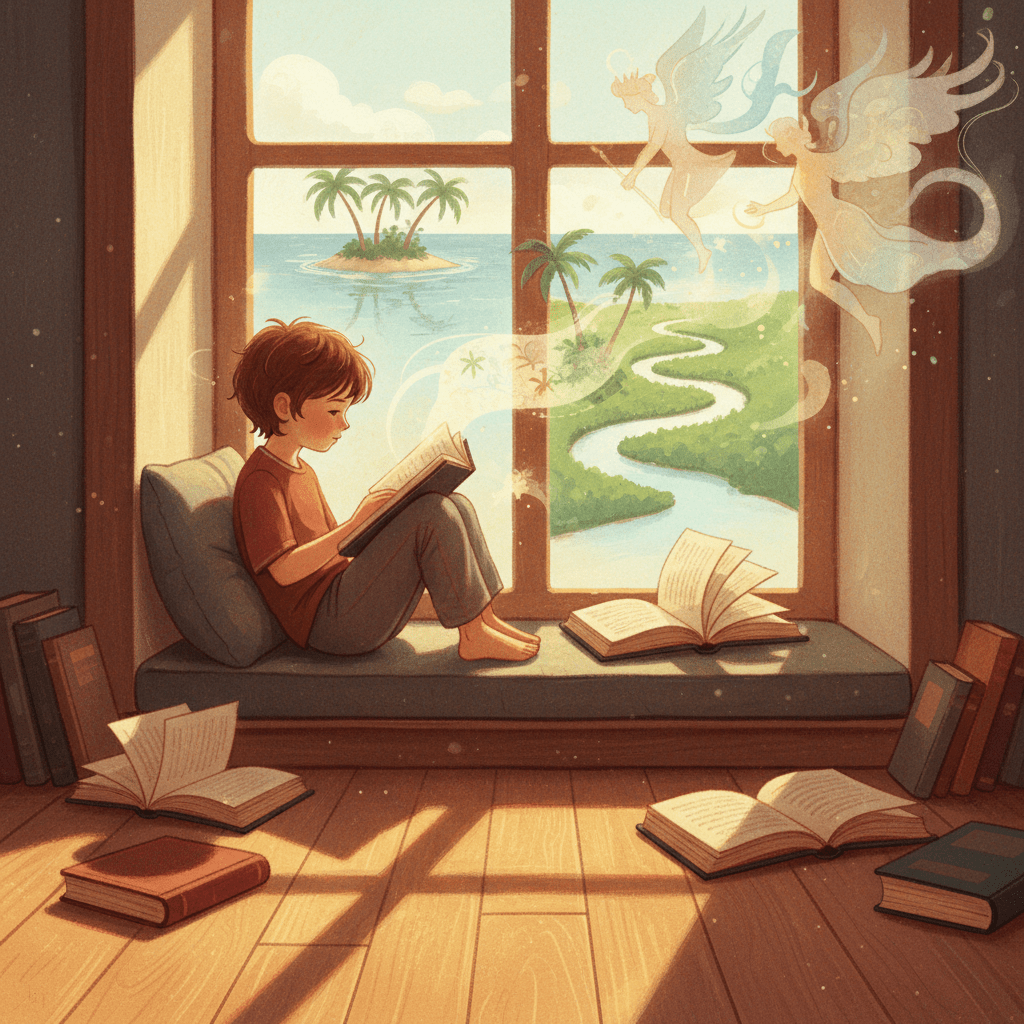
When I was a kid, my brother used to buy me English and Chinese storybooks and simplified versions of classic novels. From the very beginning, I found myself opening out into new worlds through those pages. They captivated my young mind in a way I couldn’t fully explain then. These weren’t just books I read and set aside—they were places I entered, spaces where my imagination stretched and my sense of reality quietly expanded.
Only later did I realize how much they were shaping me.
I still remember some of those stories. Robinson Crusoe was one of the first. A man alone on an island, figuring things out day by day. Back then, it felt like pure adventure. Now, I see it as a lesson in resilience and imagination. It showed me that even in isolation, the mind keeps working, keeps building meaning, keeps going.
The Mill on the Floss stayed with me in a quieter way. Maggie’s inner conflicts made me aware, very early on, that life isn’t simple and that people often carry invisible struggles. That story taught me how to sit with complexity, how to feel for someone without needing clear answers. I think that’s where empathy first began for me.
Greek mythology opened an entirely different door. Gods and mortals, fate and choice, beauty and tragedy—all of it expanded my sense of wonder. Those stories in the later stages of my life stretched my vision of reality. They didn’t pull me away from the real world; they widened it. The imagined situations pushed the frontiers of what I thought reality could be, showing me that truth can live inside symbols, myths, and stories passed down across time.
These works weren’t just creating worlds of imagination. They were quietly showing me how writing itself can be a way of seeking truth. Even when the stories were fictional, the emotions felt real. Through characters’ doubts, mistakes, longings and their struggles, I learned that truth isn’t always found in facts—it’s found in experience, shaped by story.
Somewhere along the way, I began to want to write. Not with a clear goal or ambition, but with a feeling. Writing felt like a way to understand things I couldn’t explain yet, a way to ask questions I didn’t have answers for. Imagination and truth no longer felt separate to me. One led naturally to the other.
What I understand now is that my brother gave me more than books. He gave me a way of seeing. Those early stories expanded my reality, shaped my inner world, and gently pointed me toward writing as a form of truth-seeking and thus immortality.
I may not remember every plot or every line now, but I remember what those books gave me. And that, in a quiet way, has stayed with me ever since.
 Site Title