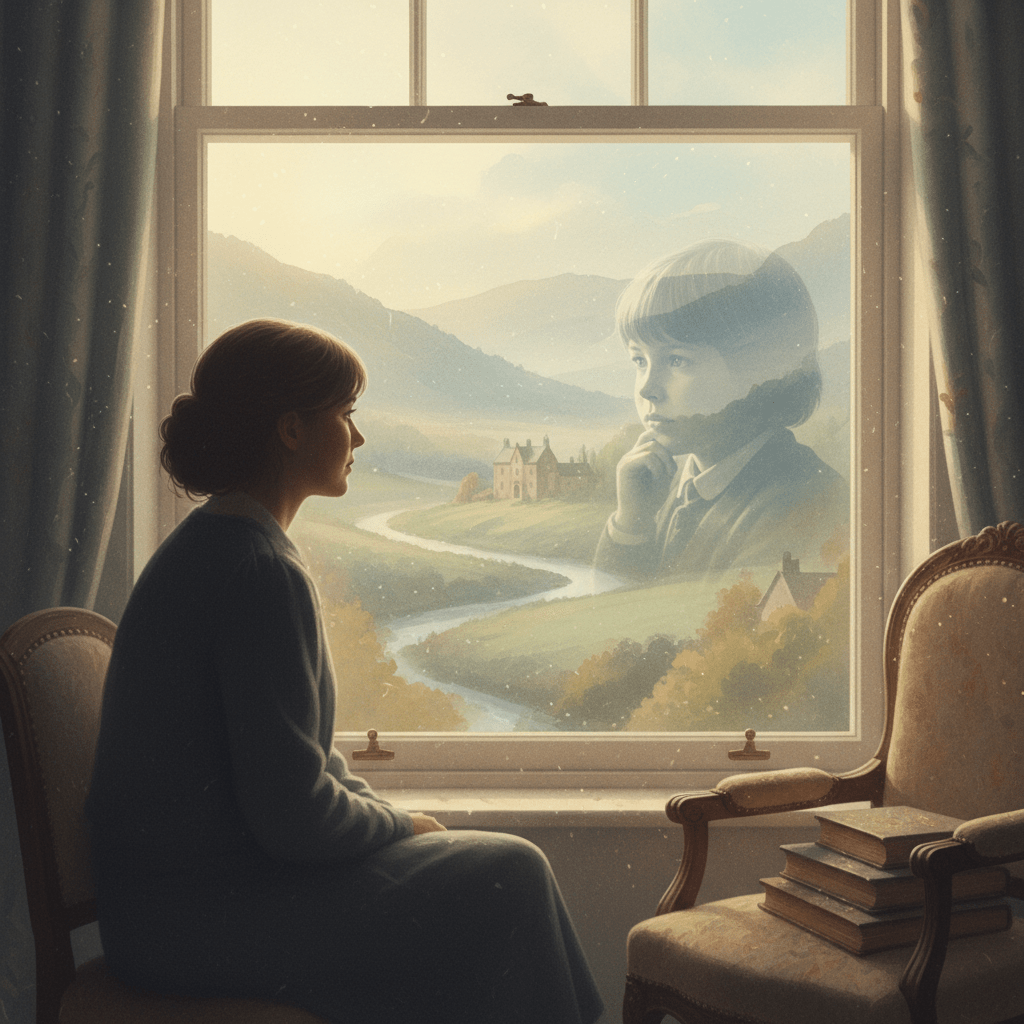
While I might want to sketch a rough contour of my dreams upon waking up, and fill in the details later, there lies a paradox in that process of creation.
Dreams can be a powerful source of ideas, but they come with a strange limitation: we usually remember only pieces of them. The moment we wake up, parts start fading, no matter how hard we try to hold on. And yet, those fragments often spark something new—a thought, an image, a feeling that pushes us to create.
That’s the paradox. Any dream‑inspired creation depends as much on forgetting as it does on remembering. We can’t bring a full dream into waking life. We can only carry whatever survives the transition. By the time we write it down or turn it into a drawing or story, we’ve already lost parts of it. The act of creating from a dream is also the act of accepting that much of it is gone.
But this isn’t necessarily a problem. Forgetting can actually help us. When the exact details slip away, we’re free to interpret the fragments in our own way. We fill in the gaps with imagination, experience, or intuition. The result isn’t a perfect record of the dream; it’s something new that grew out of it.
So whenever we create something based on a dream, we’re really working with both memory and absence. What we remember gives us the starting point. What we forget opens space for creativity. In the end, the finished work becomes its own thing—shaped by the dream, but not bound to it.
No great artists or writers work from a pure memory of dreams. The rest is a conscious process of creativity.
 Site Title